
Last Updated:
Arcady Temple Land Clearing arranges land clearing in Belton for homeowners, landowners and builders, with the work done by independent, insured clearing contractors. Belton is the county seat of Bell County and one of its faster-growing cities, up from about 23,000 residents in 2020 to nearly 26,000 by the Census Bureau’s 2025 estimate. Much of that growth lands on ground that was cedar, brush or pasture a few years earlier.
Two kinds of ground in one city
Belton sits on a boundary. The USDA soil survey for the area around town maps a mix: Lewisville, Venus and San Saba clays and clay loams through much of the city, and the shallow, stony Eckrant and Purves soils that take over on the hills to the west. East toward Temple, the deep Blackland clays begin.
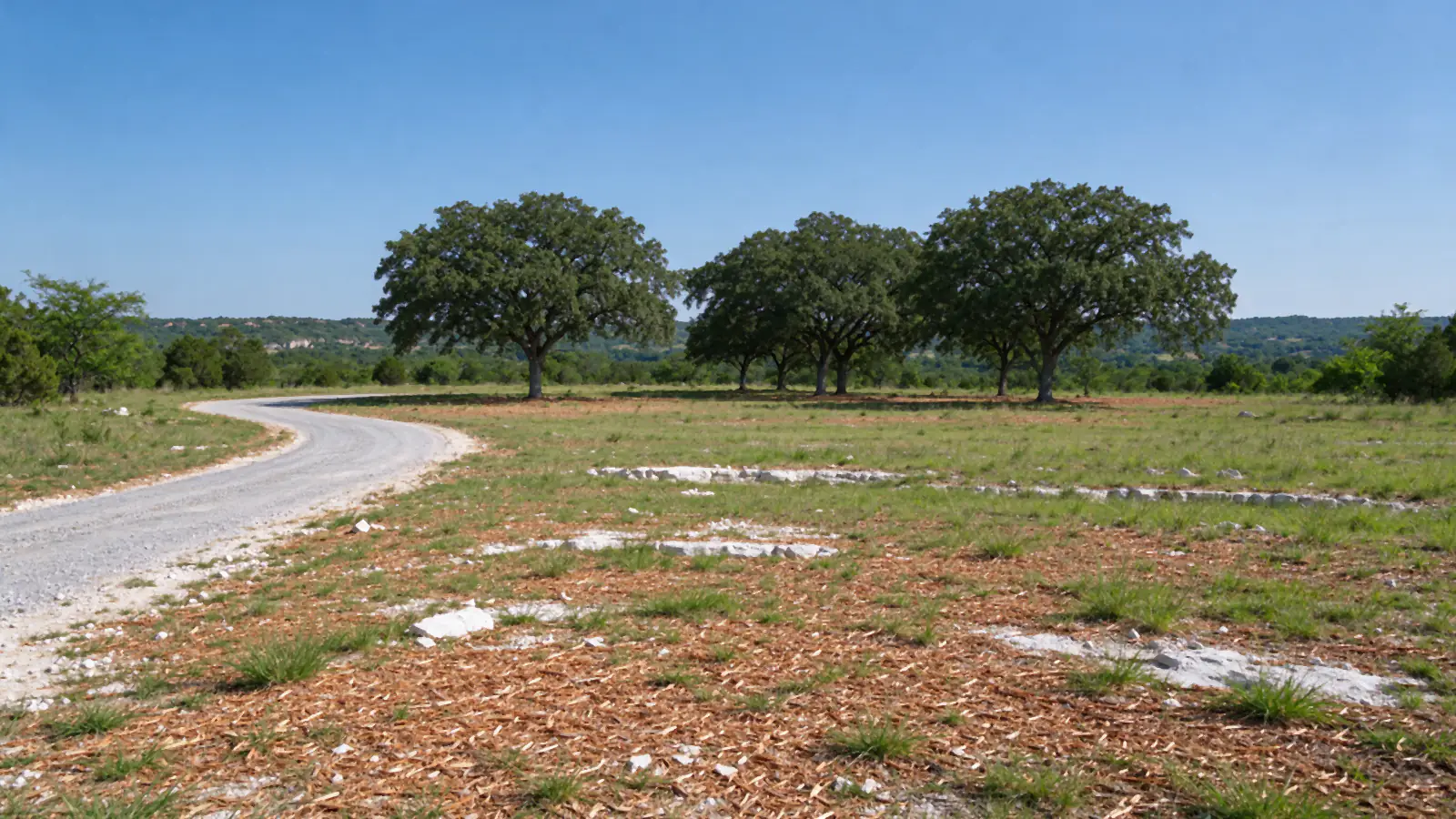
That boundary matters more than it sounds. On the western hills, Ashe juniper grows thick over limestone that can sit just a few inches down. A forestry mulcher handles the cedar well, but rock stops the head, so stumps on those spots finish a little above grade and the teeth wear faster. On the clay lots in town and to the east, rock is rarely the problem. Soft, wet clay is. After the May and fall rains, tracked machines can rut a lot badly, and waiting a few dry days is usually cheaper than fixing the ruts.
Burning in Belton takes a permit and an inspection
Many owners plan to pile and burn what they clear. Inside Belton’s city limits, that is a process. The City of Belton Fire Department requires an open burn permit at all times for burning in the city, $100 for residential and $300 for commercial. You pay at Fire Station 2 on Sparta Road, and the Fire Marshal then schedules an inspection of the burn area before any burn takes place. Belton has adopted the 2015 International Fire Code.
Outside the city limits, county and state rules apply. The Bell County judge issues burn bans for unincorporated areas in dry spells, as happened in August and September 2026. Belton’s Fire Department notes that those county bans apply outside the city, not inside it.
For a typical residential lot, the permit, the inspection appointment and the wait for good burn weather often make mulching or hauling the simpler choice. Mulching leaves the debris on the ground as cover, and nothing has to burn. The guide to burning brush in Bell County compares the rules city by city.
Cedar on the west side
The hills west of downtown and toward Morgan’s Point Resort and Harker Heights carry a lot of Ashe juniper. Young cedar spreading into open ground is the most common clearing job there, and it is also the easiest to clear for good, because Ashe juniper does not resprout from a stump cut below its lowest green limb. The cedar clearing page explains why mulching works so well on it.
The exception is mature cedar mixed with oaks and elms on steep, shaded slopes and draws. That kind of woodland can be golden-cheeked warbler habitat, and Fort Cavazos, just west of Belton in Bell and Coryell counties, supports a breeding population of the bird. A tract like that gets the habitat question answered before work starts, and the golden-cheeked warbler guide explains how to tell the two kinds of cedar apart.
Building lots on clay
New houses in and around Belton usually go on the clay soils mapped through most of town. The building pad, the driveway and anything under a slab need stumps and roots out, which is grubbing rather than mulching, and the rest of the lot can often be mulched and left for grass. Your builder’s site plan decides where that line falls. The lot clearing page walks through the handoff to the dirt contractor, and the guide on how clear a lot needs to be before you build lists what to ask your builder first.
Older lots near Nolan Creek and the Leon River often have pecans, elms and live oaks worth keeping. Clearing around them is selective clearing: keepers flagged, machines kept outside the drip line, and no wounds on oaks from February through June.
How a Belton job usually runs
A Belton job starts with the address, because the city line decides which burn rules apply and the ground under the brush decides the method.
On the walk-through, keepers get flagged first (the oak wilt guide explains why timing matters). Oak wilt is active across Central Texas west of I-35, so oaks near the work are protected from wounds in spring. Rock, wet spots, fence and any dumped debris are noted next. Then the tract is split into areas: what gets mulched, what gets grubbed for a pad or driveway, and what stays as it is.
Lots close to Belton Lake can border federal land managed by the U.S. Army Corps of Engineers, where vegetation work needs the Corps’ approval. Where your property line falls in relation to that boundary is confirmed per address, before any machine moves.
Clearing a lot or acreage in Belton?
Send the address or nearest road and what is growing on it. The city line and the ground under the brush come first.
What clearing costs in Belton
Prices do not change at the city limit, but the ground does, and the ground moves the price. Typical Central Texas budgeting ranges, once a job is large enough to fill a machine day:
| Work | Typical range |
|---|---|
| Forestry mulching, light brush | $1,300 to $2,500 per acre |
| Forestry mulching, mixed cedar and mesquite | $1,600 to $4,000 per acre |
| Forestry mulching, dense cedar on rock | $2,700 to $5,200 or more per acre |
| Clear, grub and haul | about $3,000 to $8,500 or more per acre |
| Open burn permit inside Belton | $100 residential, $300 commercial |
Small lots are priced around a machine day, because moving a machine to the site costs the same for half an acre as for three. On the rocky west side, expect the high end of the mulching ranges. The cost guide explains the parts of a price in more detail.
To talk through a Belton tract, call (254) 269-4999 or use the estimate form below.