Last Updated:
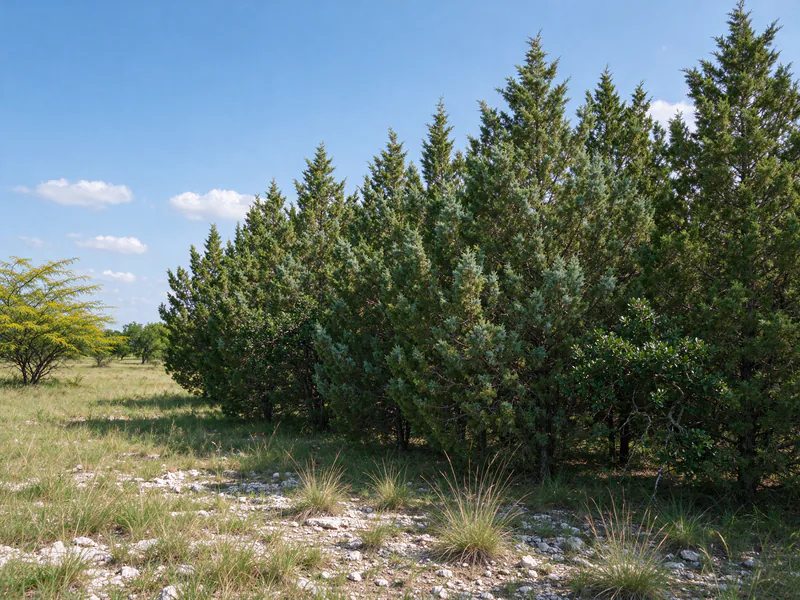
Arcady Temple Land Clearing arranges cedar clearing across Temple, Belton and the rest of Bell County, with the work done by independent, insured clearing contractors. In Bell County, “cedar” means Ashe juniper. It spreads into open ground, shades out grass, crowds oaks and builds up a fire load in dry summers. It is also one of the easiest trees to clear for good, because it does not resprout from a low cut.
What happens on the first visit
The first question on a cedar tract is what kind of cedar it is.
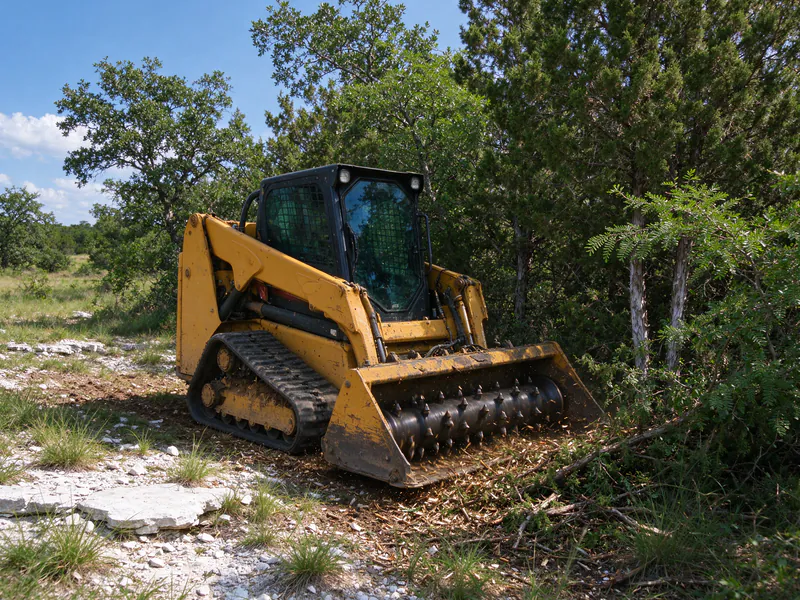
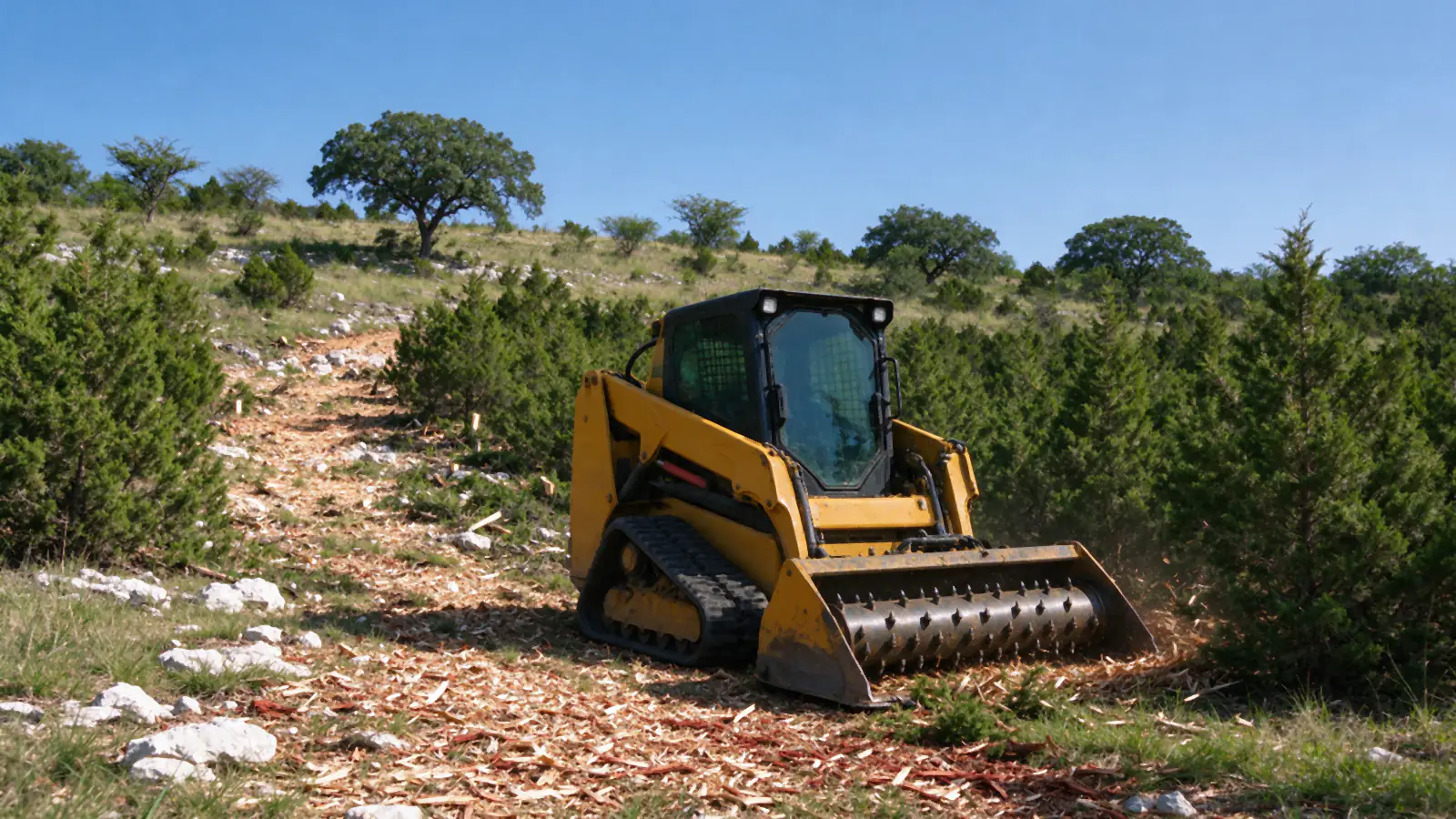
- Young cedar spreading into pasture or open ground is the common job. It is cleared with a forestry mulcher, and the method is straightforward.
- Mature cedar mixed with oaks, elms and other hardwoods on steep, moist slopes, with a nearly closed canopy, is the kind of woodland the golden-cheeked warbler uses. That is a different situation, explained below.
The walk also notes rock and slope, flags the oaks and other hardwoods worth keeping, and checks fence lines for wire hidden in the cedar.
Why cedar stays gone
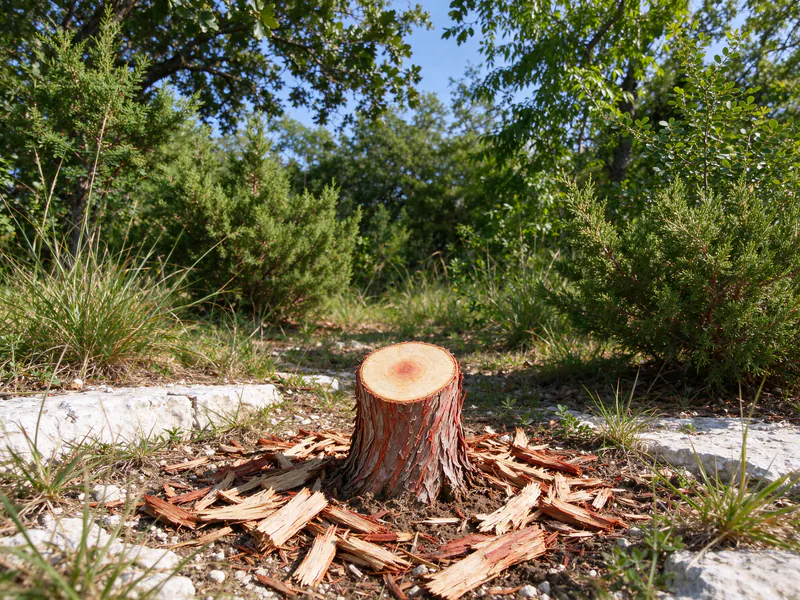
Ashe juniper has no buds on its trunk. When it is cut below its lowest green limb, it cannot put out new shoots, and the stump dies. That makes cedar unlike mesquite, hackberry and many hardwoods, which sprout back from the base or roots.
What does come back is new cedar from seed, scattered across cleared ground over the following years. A mowing or spot-cutting pass every few years keeps young seedlings from taking hold. The guide on whether brush grows back after clearing compares cedar with other species.
Rock and slope west of I-35
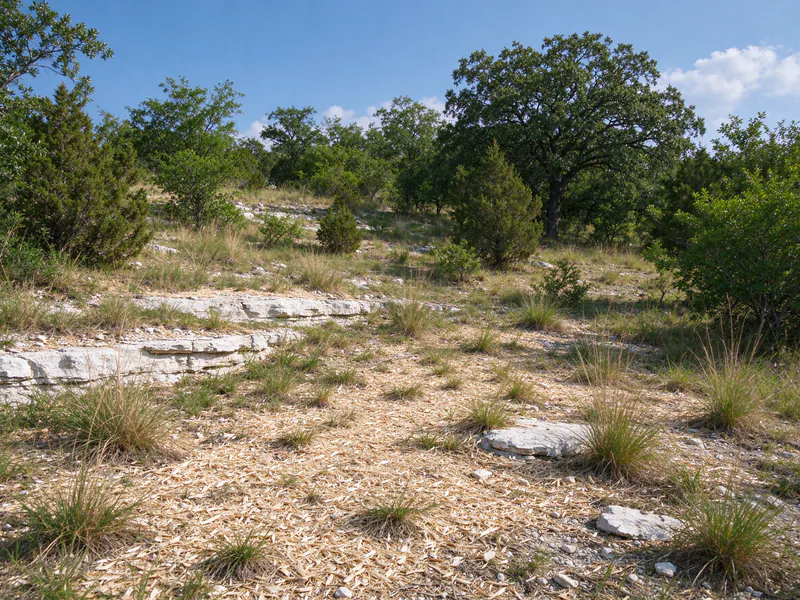
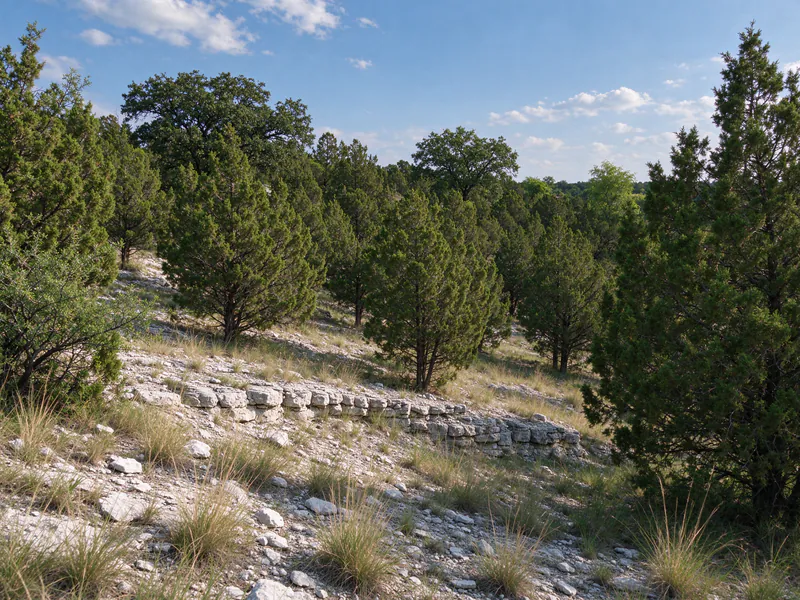
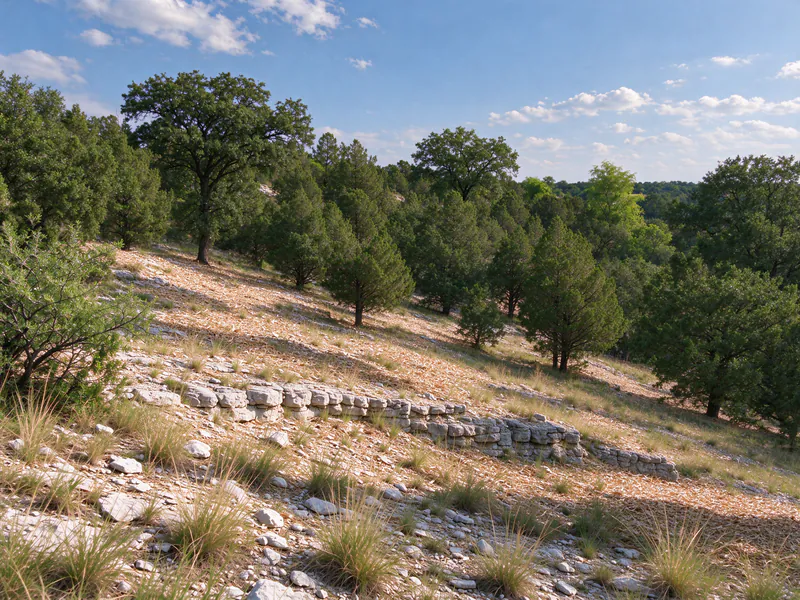
Cedar grows best where the soil is thin. Around Belton’s west side, Harker Heights, Nolanville and the hills toward Killeen, the soil survey maps shallow, stony soils such as Eckrant, Purves and Real, some listed as rock outcrop complexes on slopes up to 40 percent. On that ground:
- A forestry mulcher handles the cedar itself well, but rock limits how low the head goes, so some stumps finish a few inches above grade.
- Mulcher teeth wear faster on rock, which shows up in the price.
- Steep draws and outcrops may need hand cutting where a machine cannot work safely.
- Thin, stony soils wash easily once bare, so leaving the mulch spread as cover matters more here than on deep clay.
Rocky hillside or open pasture?
Send photos and the nearest road. The ground and the kind of cedar decide the plan.
The golden-cheeked warbler question
The golden-cheeked warbler is a federally endangered songbird that nests only in Central Texas. The U.S. Fish and Wildlife Service describes its habitat as woodland with mature Ashe juniper, about 15 feet tall and 5 inches across at chest height or larger, mixed with oaks, elms and other hardwoods, usually on moist canyon slopes and adjacent uplands with a nearly closed canopy. Fort Cavazos, in Bell and Coryell counties, supports a breeding population.
Federal law treats significant habitat modification that harms the bird as prohibited. Surveys showing the birds are absent only count when done between March 15 and June 1. So a tract of mature, mixed cedar woodland on a slope gets the habitat question answered before clearing is planned. Young cedar spreading into open pasture is not that habitat. The golden-cheeked warbler guide explains how to tell the two apart and who to ask.
Oaks in the cedar
Most cedar stands in Bell County have live oaks, post oaks or Spanish oaks mixed in. Those are usually the trees worth keeping, and clearing around them is selective clearing. Oaks in the stand are not wounded from February through June, when oak wilt spreads most easily, and any fresh wound is painted. The oak wilt guide covers why that window matters.
Debris, fire and timber
Cedar debris left in deep piles is a fire load in a dry summer, which is another reason mulching it thin and spread is the usual finish. Inside Temple and Belton, burning cleared cedar needs a permit; in the county, burning is allowed only when no burn ban is on. Cedar posts sell for little today, so plan on clearing as a cost rather than a sale. The guide to burning brush in Bell County compares burning with mulching and hauling.
After the cedar comes out
Cleared cedar ground changes over the next few seasons. Grass and forbs come up through the mulch once rain returns, faster on deeper soils and slower on the thin, stony ones. Oaks left in the stand often fill out with the extra light. Cedar seedlings arrive from seed carried by birds, usually along fences and under perches.
A light follow-up every few years, mowing where a mower can go and cutting seedlings by hand where it cannot, keeps the ground open at a fraction of the original cost. Waiting until the seedlings are trees means paying for clearing again. Seedlings are easiest to deal with while they are knee high; at that size they can be cut with hand tools and do not come back.
Cedar near homes
Cedar burns hot, and dense cedar against a house, barn or fence is a fire concern in a dry Central Texas summer. Clearing a strip around structures, keeping mulch spread thin rather than piled, and mowing the strip each year all reduce that risk. Around homes, cutting near walls and roofs is done by hand. Cut cedar is moved away from the house rather than piled beside it, and any mulch near walls is kept thin so it does not hold a spark.
What cedar clearing costs
Typical Central Texas budgeting ranges run about $1,600 to $4,000 an acre for mixed cedar, mesquite and small trees, and $2,700 to $5,200 or more an acre for dense or older cedar on rock. Small jobs are priced around a machine day. On the rocky west side, expect the higher end. The land clearing cost guide explains the parts of a price, and the mulching versus grubbing guide covers when cedar ground needs more than mulching.
For a cedar tract, call (254) 269-4999 or send photos through the form below.