Last Updated:
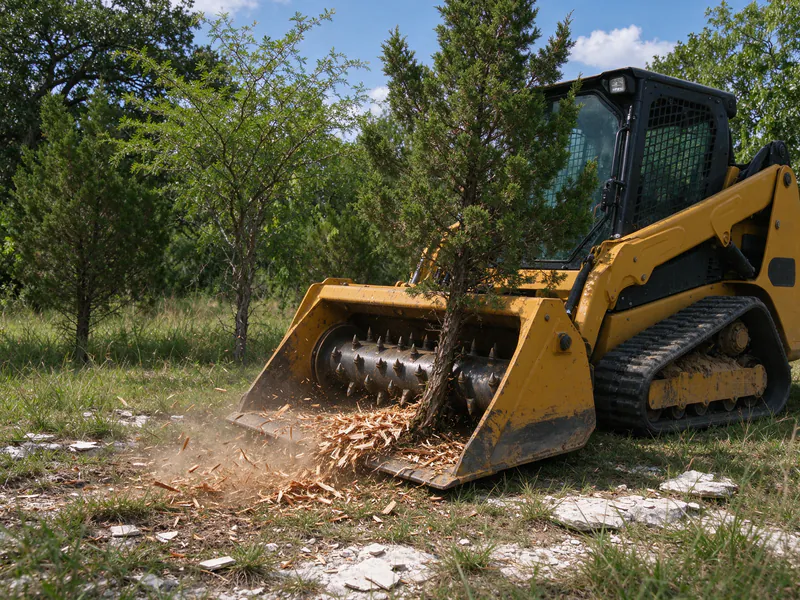
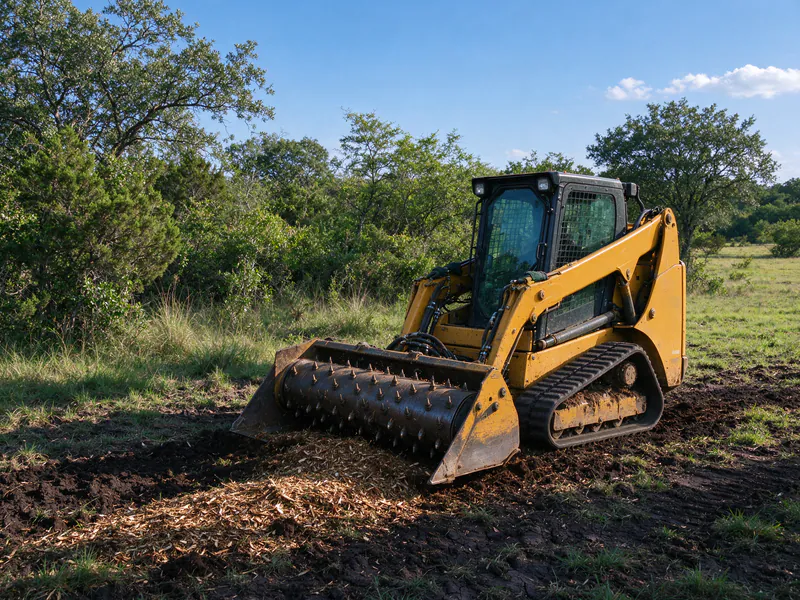
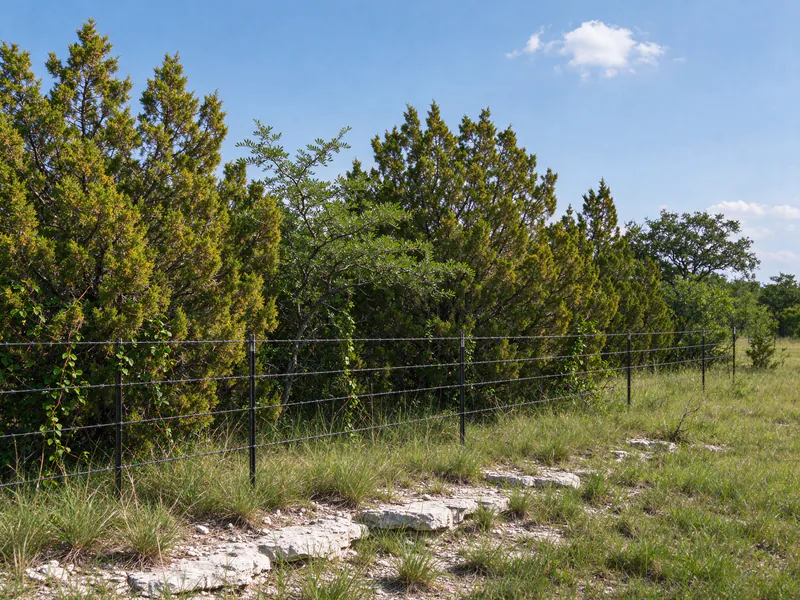
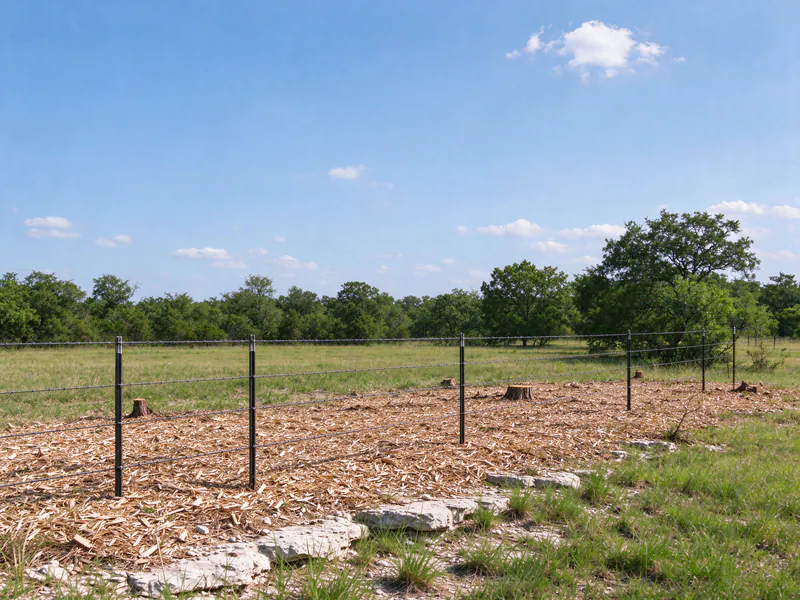
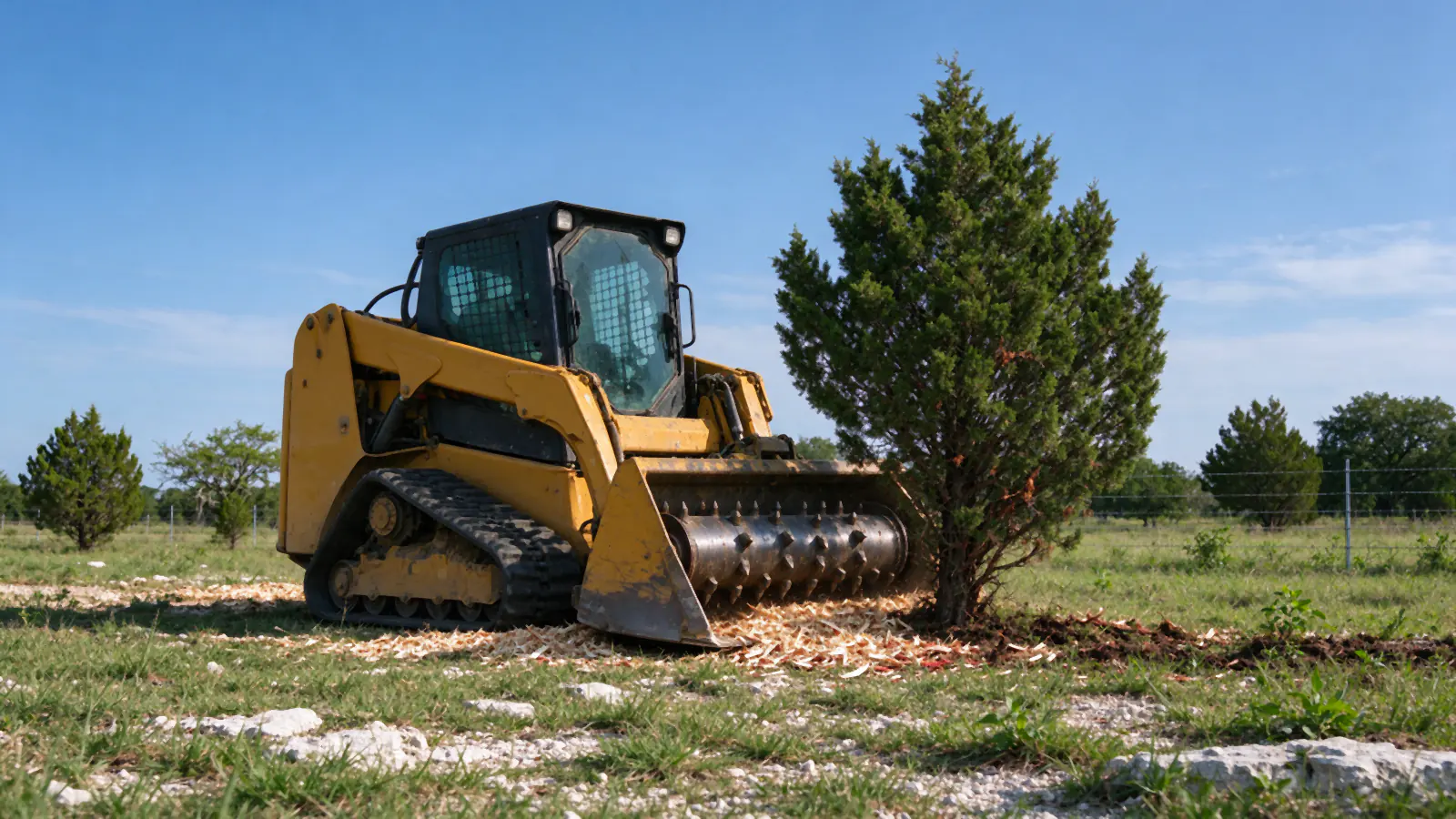
Arcady Temple Land Clearing arranges forestry mulching across Temple and the rest of Bell County, with the work done by independent, insured clearing contractors. A forestry mulcher is a heavy cutting drum with fixed teeth, mounted on a tracked carrier, that grinds brush, cedar and small trees where they stand and spreads the result as a layer of chips. Nothing is piled, burned or hauled away. For most pastures, wooded lots, trails and fence lines in Bell County, that makes it the first method to consider.
This page explains what mulching leaves behind, where the local ground changes the job, what it costs and when it is the wrong choice.
What happens on the first visit
The first visit is a walk of the tract with you or your notes. Four things get looked at, because together they set how many acres a machine can cover in a day.
- Stem count and trunk size. A mulcher moves quickly through brush and young cedar. Once trunks pass about 8 inches across, it slows down sharply, and a few big trees can take longer than an acre of brush.
- Rock and slope. West of I-35 the soils thin out over limestone. Eckrant and Purves soils, common around Harker Heights, Nolanville and west Belton, often have rock within a few inches of the surface.
- Wet ground. On the deep clay east of Temple, low spots hold water for days after a rain, and tracked machines rut them.
- Hidden debris. Old fence wire, T-posts, buried concrete and dumped trash wreck mulcher teeth, so they get flagged or pulled first.
The visit also marks the trees you want to keep, using the same approach as selective clearing, and any part of the tract that should be grubbed instead of mulched, such as a future house pad or driveway.
What mulching leaves behind
A mulched tract has three features owners should expect.
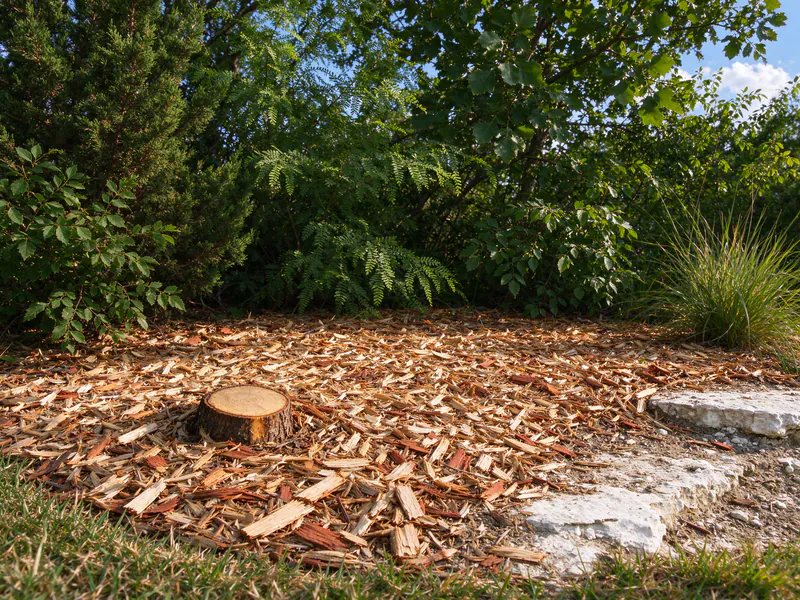
Stumps at about grade. The head grinds stumps down to roughly ground level. Roots stay in the soil and rot slowly. That is fine for grass, a trail or a fence line. It is the wrong finish for anything that will carry weight, because roots that rot under a slab or a driveway leave voids that settle.
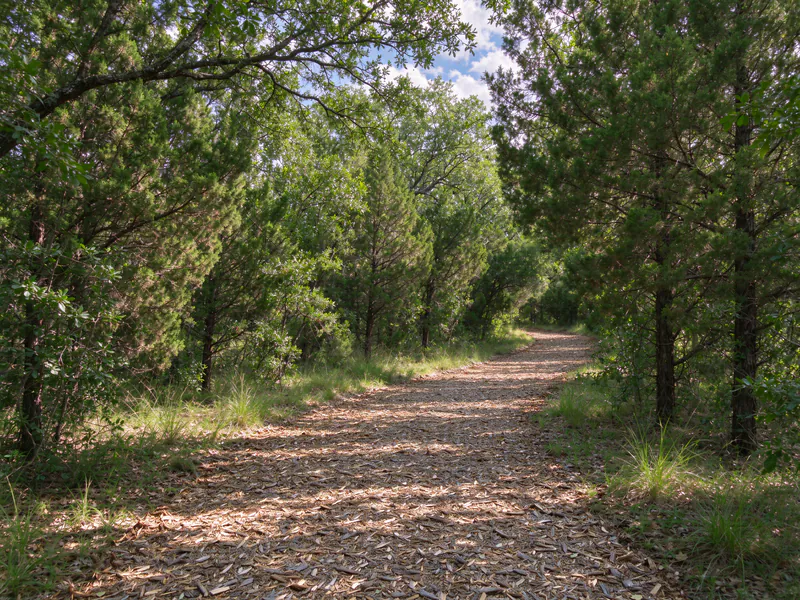
A layer of mulch. The chips cover bare soil, which slows erosion and holds moisture. On Blackland clay, that cover helps new grass through a dry summer. Where the machine worked through heavy cedar, chips can pile up deep enough to smother grass, so they get spread.
Some regrowth, depending on species. Ashe juniper, the cedar people in Bell County mean, has no buds on its trunk. Cut below its lowest green limb, it does not come back. Mesquite and many hardwoods do resprout from the base or roots, so a mulched stand of mesquite will put up sprouts within a season. The guide on whether brush grows back after clearing explains which species return and why. Planning a mowing or spot-treatment pass for the first year keeps it from closing back in.
Where Bell County ground changes the job
Bell County sits across two very different kinds of ground, and a mulching estimate starts by asking which one your tract is on.
Limestone and cedar, west of I-35
Around Belton, Harker Heights, Nolanville and the hills toward Killeen, the soil survey maps shallow, stony soils such as Eckrant, Purves and Real, some of them listed as rock outcrop complexes on slopes. Cedar thrives there. The mulcher works well on the cedar itself, but rock limits how low the head can go, and the teeth wear faster. Stumps may finish a few inches above grade, and steep, rocky draws can need hand cutting.
Black clay and mesquite, east of I-35
Toward Temple, Troy, Holland and Rogers, the dominant soils are deep clays, led by Houston Black, the most common soil in the county by acreage. These clays swell when wet and crack when dry. A mulcher has no trouble with the soil itself, but timing matters: Bell County’s rain comes in two peaks, May and September through October, and tracked machines rut soft clay badly in those weeks. Waiting a few dry days usually saves a regrading bill; the mulching versus grubbing guide covers how timing and method fit together.
Not sure which side your land is on?
Send the address or nearest road and a few photos. The ground type and the growth on it decide the method.
When mulching is the wrong choice
Mulching is the right first answer for most pastures and wooded lots, but not all of them.
- Building pads and driveways. Anything getting a slab, a driveway base or engineered fill needs stumps, roots and organic matter removed. That is grubbing, covered on the lot clearing page.
- Dense mesquite you want gone for good. Mesquite sprouts from buds just below the soil line, so mulching at grade leaves them. See mesquite removal for grubbing below the bud zone.
- Mature cedar-oak woodland on canyon slopes. That kind of woodland can be golden-cheeked warbler habitat. It is a question to settle before work starts, explained on the cedar clearing page.
Burning, hauling and the debris question
One reason mulching is popular here is that it sidesteps the debris problem. Inside Temple, the city code bans outdoor burning of brush and trees except land-clearing burns the Fire Marshal permits when no practical alternative exists, and contractor-cut debris has to go to the landfill rather than the curb. Belton requires an open burn permit and an inspection for any burn. Outside city limits, Bell County issues burn bans in dry spells, as it did in August and September 2026. Mulching needs none of those decisions, because the debris stays on the ground as cover.
What forestry mulching costs here
Typical Central Texas budgeting ranges, once a job is big enough to fill a machine day:
| Growth | Typical range per acre |
|---|---|
| Light brush and understory | $1,300 to $2,500 |
| Mixed cedar, mesquite and small trees | $1,600 to $4,000 |
| Dense or older cedar, larger stems, rock | $2,700 to $5,200 or more |
Small jobs are priced around a machine day, roughly $3,000 for a compact mulcher with transport often included, or about $4,000 plus transport for a large dedicated machine, because moving the machine costs the same for half an acre as for three. Rock, slope, wet ground, trees to protect and hidden wire all push a job toward the high end. The land clearing cost guide breaks the ranges down further, and the cost estimator gives a range for your acreage.
After the mulcher leaves
Expect grass and forbs to come up through the chips once rain returns. Expect sprouts from hardwoods and mesquite, and no sprouts from cedar. Most owners mow or spot-treat in the first year and overseed thin areas before the fall rains. Keep trucks off freshly mulched clay after a rain. The guide on what to do after forestry mulching covers the first season in more detail.
To get a tract mulched, call (254) 269-4999 or send the details through the estimate form below.