
Last Updated:
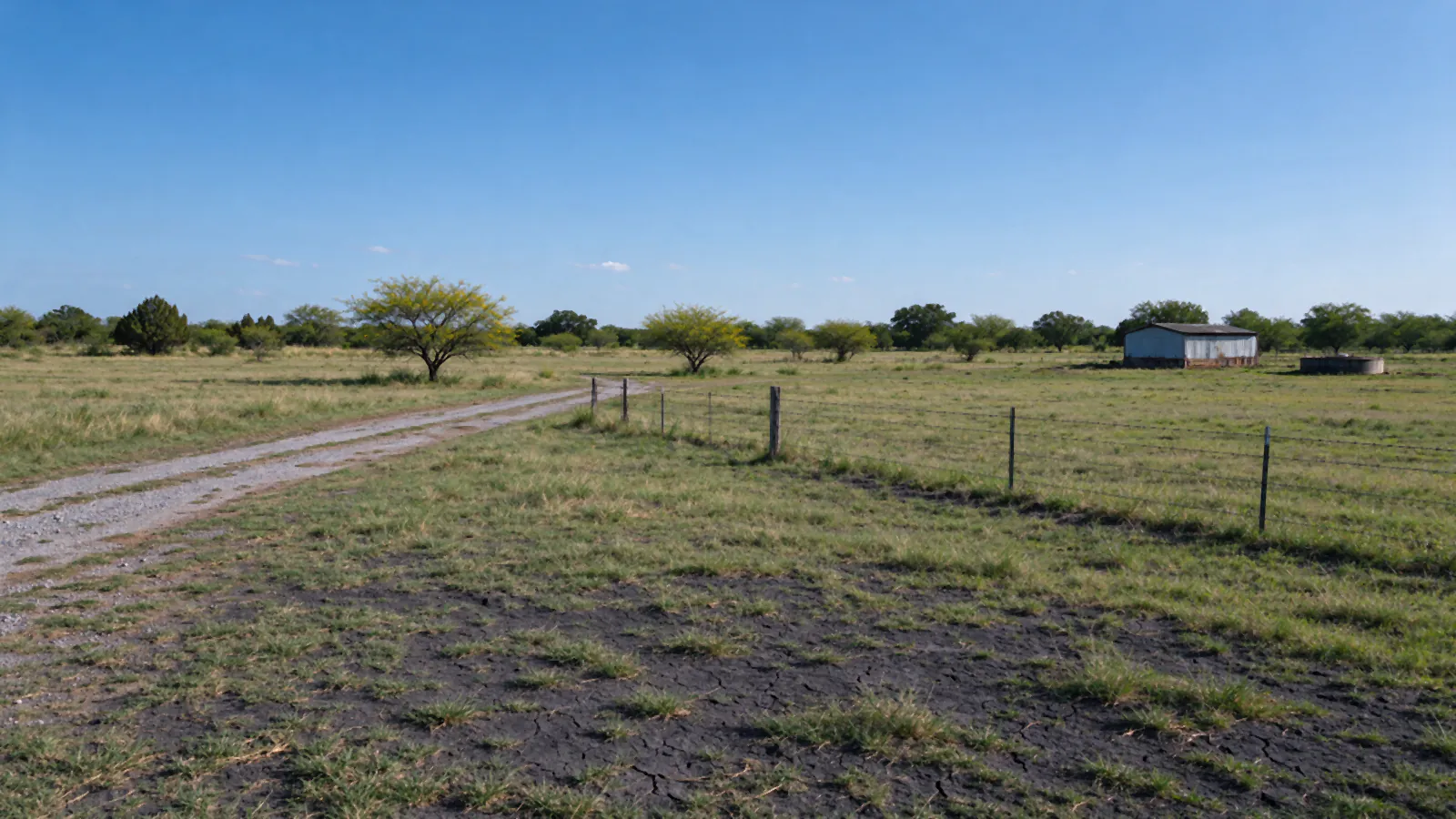
Arcady Temple Land Clearing arranges clearing on acreage and ranch land across unincorporated Bell County, with the work done by independent, insured clearing contractors. Outside the cities, the rules are simpler than in Temple or Belton, but the land is more varied: deep Blackland clay pasture in the east, thin limestone hills covered in cedar to the west, and river bottoms along the Leon, the Lampasas and the Little River in between.
The burn rule outside city limits
Burning is the biggest difference between rural and city clearing. Under the state’s outdoor burning rule, in a county that is not part of an air quality nonattainment area, land owners may burn trees, brush and other plant growth from land clearing on the property where it grew, without notifying the state, subject to city-limit bans. Bell County is not designated nonattainment.
Two county rules sit on top of that:
- Only natural vegetation. The Bell County Fire Marshal treats burning tires, plastics, rubber, or manufactured or treated wood as a Class A misdemeanor.
- Burn bans. The county judge issues emergency burn bans for unincorporated areas when conditions are dangerous. A ban started in August 2026, another in September, and the September ban was lifted on October 1, 2026 after rain.
Burns are reported to the county burn line before lighting. A clearing plan that depends on burning piles should have a fallback for late summer, when bans are most likely. The guide to burning brush in Bell County covers safe pile burning and the alternatives.
Two kinds of country
East of I-35: Blackland clay and mesquite
Toward Troy, Holland, Rogers and Little River-Academy, the soil survey is dominated by deep clays: Houston Black, the most common soil in the county, along with Heiden, Branyon and Burleson. These are prime farm and pasture soils, and idle fields fill with mesquite. Mesquite resprouts from buds below the soil line, so mesquite removal means grubbing below that bud zone, ideally when the clay is firm but not cracked hard, usually late fall through early spring.
West of I-35: limestone hills and cedar
Toward the Lampasas River, Stillhouse Hollow and the hills near Killeen, soils such as Eckrant, Purves and Real sit shallow over limestone, some mapped as rock outcrop on slopes. Ashe juniper thrives there. Cedar clearing by forestry mulching handles it well, though rock limits how low the head can go. Mature cedar mixed with oaks on canyon slopes can be golden-cheeked warbler habitat, a question to settle first.
Clearing acreage in the county?
Send the acreage, the nearest road and what is growing. East or west of I-35 sets the method.
River bottoms and wet ground
Between the uplands, the Leon, Lampasas and Little rivers and their creeks run through bottomland mapped as Tinn clay, frequently flooded, more than 21,000 acres of it in the county. Bottomland grows big pecans, elms and hackberry, holds water long after a rain, and floods. Clearing there is scheduled for dry spells, leaves trees along the banks to hold the soil, and checks the county floodplain rules before any fill or structure is planned.
Private lines and rural hazards
On rural tracts, the utilities that cause trouble are often private: a water line from a well to a barn, electric to a pump, an old septic field or a gas line to an outbuilding. Texas811 locators mark utility-owned lines, not private ones, so the walk-through asks where those run.
Distance matters on rural jobs too. A tract at the far side of the county means a longer haul for the machine and its trailer, which shows up in mobilization, and debris hauled from a ranch to the Temple Landfill can be a long round trip. That is one more reason most rural clearing leaves the debris on site as mulch, or burns it when the county rules allow. Ash wood stays in the county under the emerald ash borer quarantine either way. Old fence, buried trash and abandoned equipment are common in brush on older places, and they are flagged before machines move.
Ag valuation and change of use
Much of rural Bell County carries an agricultural valuation. Clearing brush to improve grazing keeps land in that use. Clearing it to build a house or for another use can be a change of use, and under Texas law that brings an additional tax equal to the difference for each of the three prior years. Talk to the Bell County Appraisal District before clearing a parcel you might sell or build on. The guide to clearing ag land covers the questions to ask.
County permits
Clearing itself does not need a county permit. Work that is part of platting a subdivision or building in a floodplain does, and Bell County handles those permits through its online portal, which it moved to a new system for projects started from January 2025. Construction disturbing an acre or more falls under the state’s construction stormwater permit, and grubbing deeper than 16 inches needs a Texas811 locate first.
How a rural job usually runs
A rural walk looks at the whole place: fence lines, tanks, draws, roads, shade trees and the brush between them. The plan usually mixes methods, such as pasture clearing for the open ground, fence line clearing so the fence crew can rebuild, and selective clearing around the house and shade trees. Larger tracts are often done in phases to spread the cost.
What clearing costs on acreage
Per-acre prices fall as acreage grows, because the trip to bring a machine is spread over more ground.
| Work | Typical figure |
|---|---|
| Forestry mulching, light to mixed brush | $1,300 to $4,000 per acre |
| Forestry mulching, dense cedar on rock | $2,700 to $5,200 or more per acre |
| Pasture shredding (AgriLife East region) | $15 to $75 per acre |
| Dozer land clearing, under 160 hp (AgriLife East region) | $120 to $250 per hour |
The first two rows are typical Central Texas budgeting ranges; the last two come from Texas A&M AgriLife Extension’s custom rates survey for its East region, which includes Bell County. The cost guide explains how they fit together.
For acreage anywhere in Bell County, call (254) 269-4999 or use the estimate form below.