Last Updated:
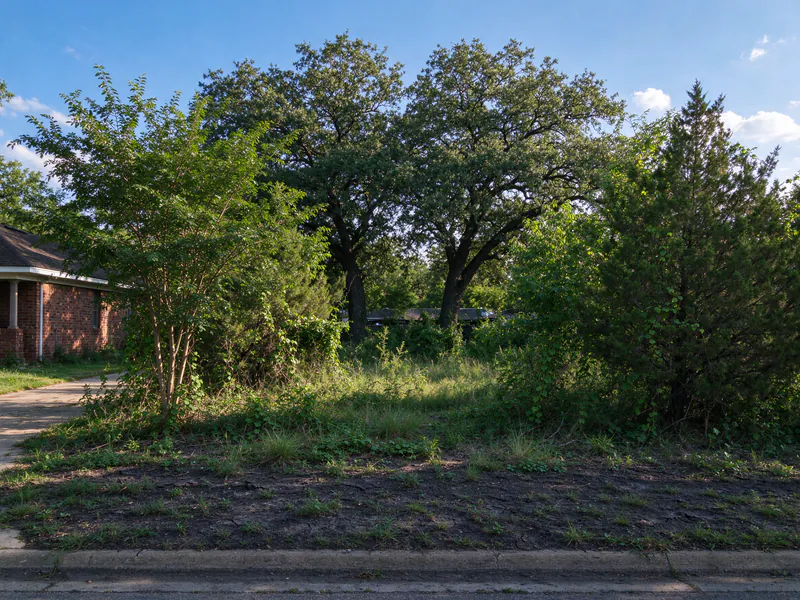
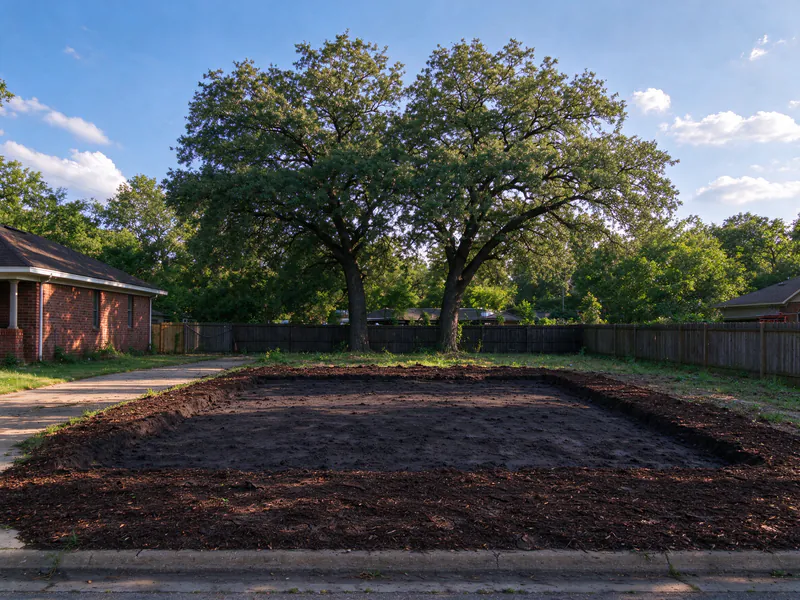
Arcady Temple Land Clearing clears residential lots across Temple and Bell County for owners and builders, with the work done by independent, insured clearing contractors. Clearing a lot is really two jobs on one piece of ground. Inside the building envelope, trees, stumps and roots come out so the next trade can work. Outside it, the goal is a yard you want to live with, which usually means keeping the strongest trees and mulching the rest, as with brush clearing.
What happens on the first visit
The walk-through starts with paper. A site plan, plat or even a sketch from your builder shows where the slab, driveway, septic and setbacks go. Without it, the line between “grub” and “mulch” is a guess.
Then the lot itself:
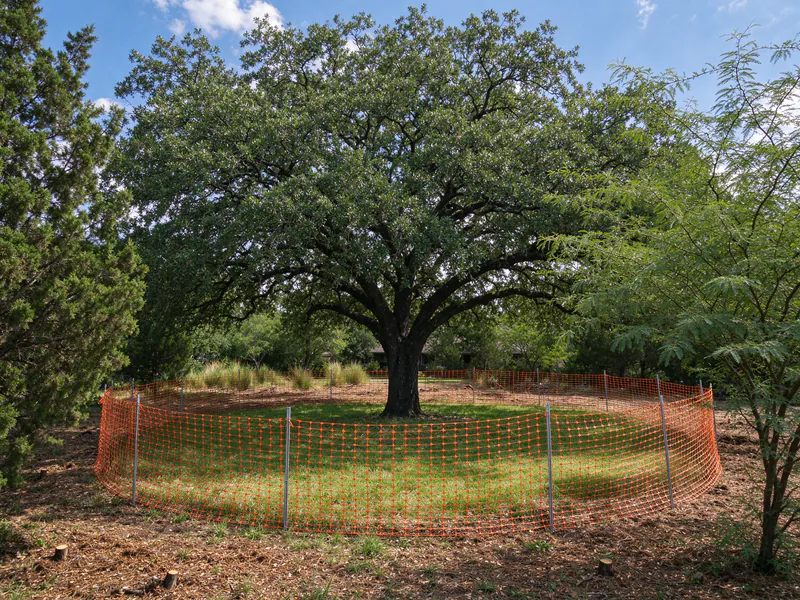
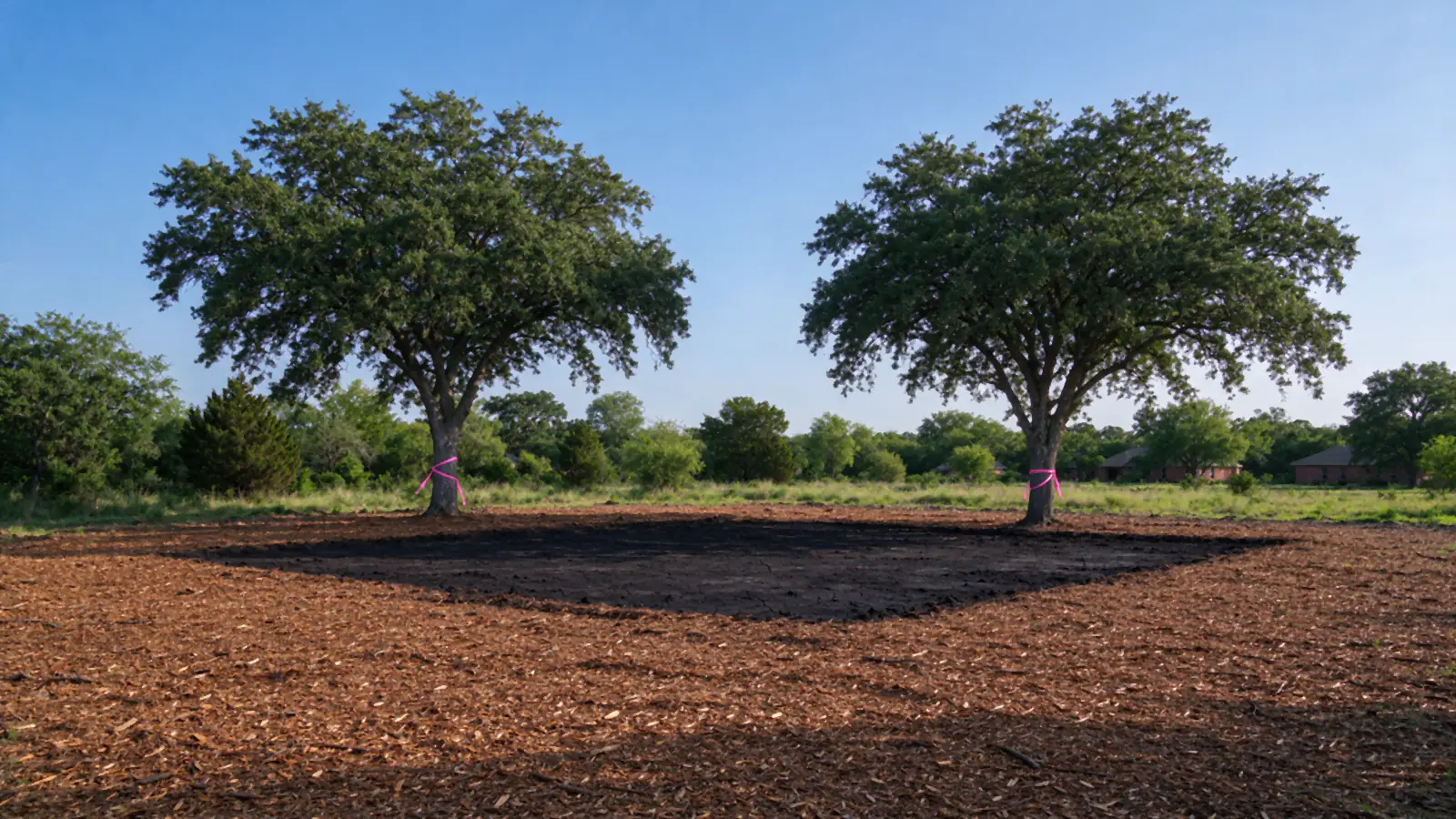
- Trees worth keeping. Live oaks, post oaks, pecans and elms near the edges get flagged and their root zones marked.
- Ground type. Most lots around Temple and Troy sit on deep Blackland clay; lots on the west side of Belton and toward Harker Heights often sit on shallow limestone. The ground decides how stumps come out and how long the work takes.
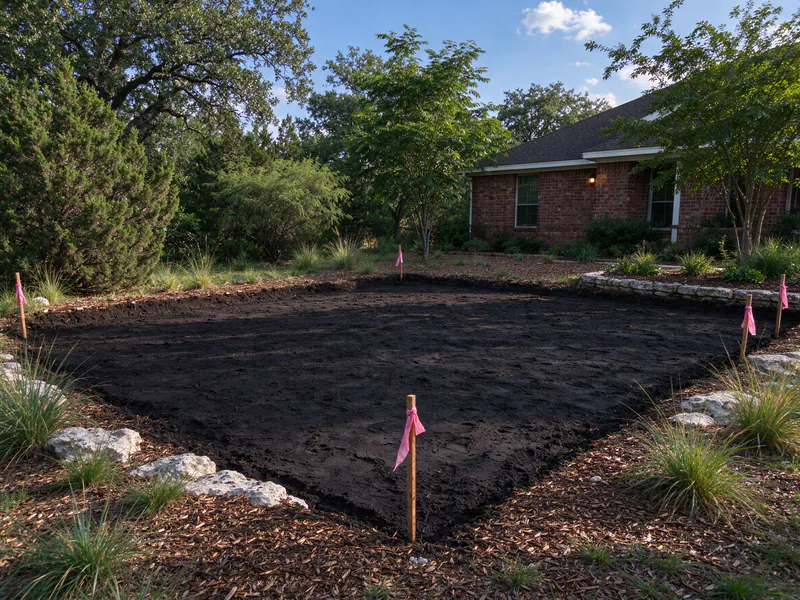
- Utilities and stakes. Survey stakes stay standing. Any grubbing deeper than 16 inches needs a Texas811 locate first.
- Rules. Inside Temple, contractor-cut debris goes to the landfill, not the curb, and burning needs a Fire Marshal permit. A lot inside Temple’s I-35 corridor overlay and near the floodplain may have protected trees over 8 inches.
Inside the building envelope
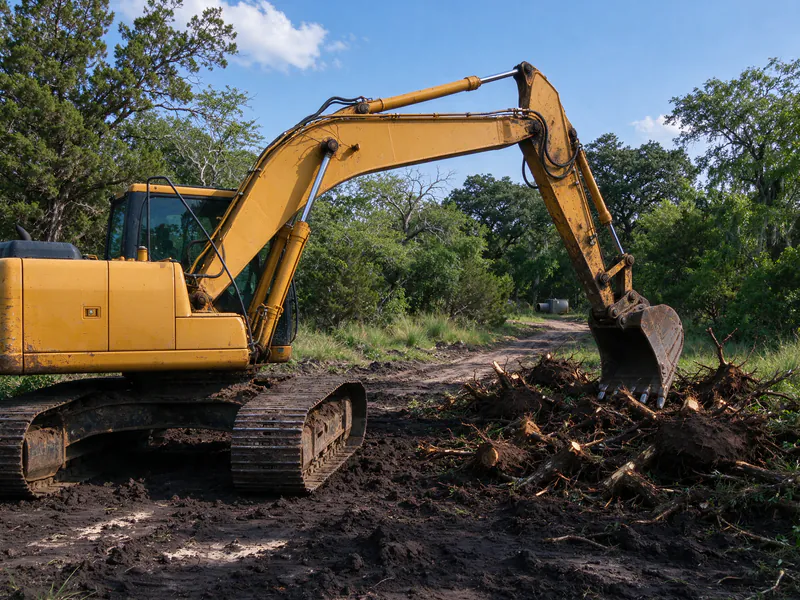
Inside the envelope, the work is clearing and grubbing. Trees are felled, stumps and root balls are pulled with an excavator, and roots are cleared from the pad and driveway areas. Organic topsoil is handled the way your builder wants: some stockpile it for later landscaping, others want their own crew to strip it.
Roots matter under a slab because they rot. A stump ground off under a driveway leaves a mass of wood that settles over a few years, and on shrink-swell clay that settling adds to movement the soil already causes. Pulling the root ball avoids that, and the hole is filled so it does not hold water.
The finish here is a cleared, rough pad, not a build-ready one. Grading, fill and compaction belong to the dirt contractor. The guide on how clear a lot needs to be before you build lists what to settle with your builder before clearing starts.
Outside it
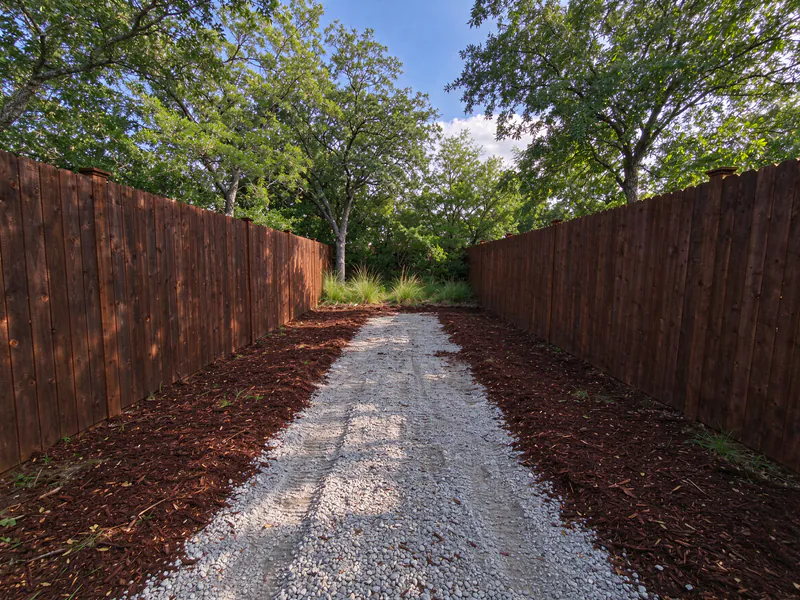
Outside the envelope, the goal changes. Brush and small trees can be mulched in place, stumps ground to grade, and the trees you want kept protected with a working line outside their drip line. The driveway corridor is cleared to its full width so trucks and concrete pumps can reach the pad.
Keeping trees close to a new house is a judgment call. A live oak can survive clearing around it, but compaction and fill over its roots during construction often kill it a few years later. The walk-through is the time to decide which trees are realistic to keep and which will be lost anyway. Selective clearing explains how kept trees are protected.
Have a site plan?
Send it with the address. The pad, driveway and setbacks show exactly what needs grubbing.
Black clay, rock and the weather
Lot clearing in Bell County runs on two kinds of ground.
East of I-35, around Temple, Troy and Holland, lots sit on Houston Black and related clays that swell when wet. After the May rains and again in September and October, tracked machines rut a soft lot badly, and a rutted pad costs money to regrade. Waiting a few dry days is usually the cheaper choice than regrading. The guide on clearing land after rain on black clay explains how to tell when the ground is ready.
West of I-35, around Belton’s west side, Nolanville and Harker Heights, rock can sit a few inches below the surface. Stumps come out more easily, but roots wrap around ledges, and the excavator may hit rock before the root ball ends.
Debris from a residential lot
What happens to the brush depends on the address.
- Inside Temple, burning is banned except land-clearing burns the Fire Marshal permits when no practical alternative exists, and contractor-cut debris has to go to the landfill or a designated site.
- Inside Belton, any burn needs an open burn permit, $100 residential, and an inspection.
- Outside city limits, state rules allow land-clearing burns unless the county has a burn ban in place.
On most residential lots, mulching what can stay and hauling what cannot is simpler than burning. The guide to burning brush in Bell County compares the options.
Questions to settle with your builder first
A short conversation with your builder before clearing avoids most of the surprises on a residential lot.
- Where exactly is the pad? Staked on the ground, not just drawn on the plan. A few feet matters when a keeper oak is close.
- Who strips the topsoil? Some builders want it stripped and stockpiled during clearing, others want their own crew to do it.
- How wide is the driveway corridor, and will it get base or concrete? Anything under a drive needs grubbing.
- Where do septic, water and electric run? Grubbing near those lines needs care, and private lines are not marked by 811.
- Which trees does the builder or lender want kept? And which do they expect to lose during construction anyway?
- When does the dirt contractor start? Clearing too early on clay invites a rain on a bare pad; too late holds up the schedule.
Write the answers into the estimate so everyone works from the same list.
What lot clearing costs
Lot clearing is priced by area, density and how much needs grubbing. Typical Central Texas budgeting ranges run about $3,000 to $8,500 or more an acre for clear, grub and haul, and $1,300 to $4,000 an acre for mulching the parts that can be mulched. A typical residential lot is small enough that the machine day sets a floor of about $3,000 to $4,000. The land clearing cost guide breaks those numbers down, and the estimate checklist shows what a clear lot-clearing quote should list.
To get a lot looked at, call (254) 269-4999 or send the site plan through the form below.