Last Updated:
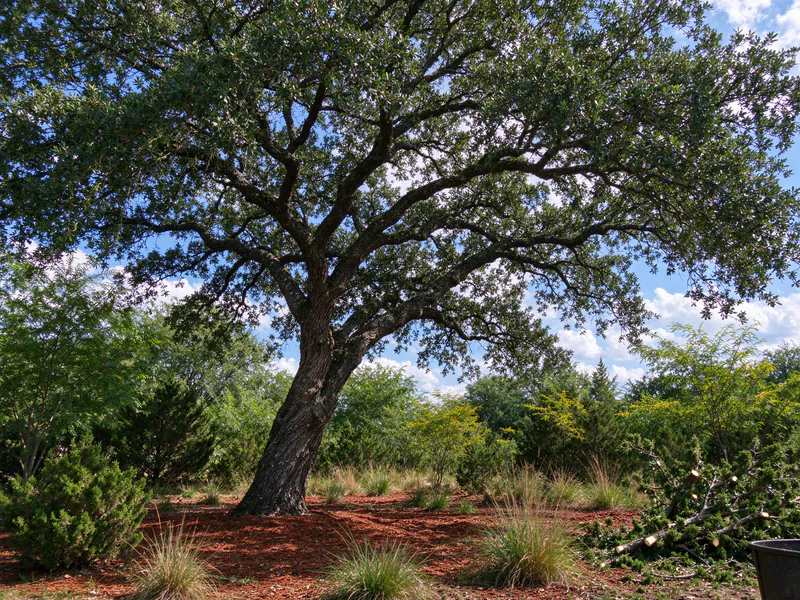
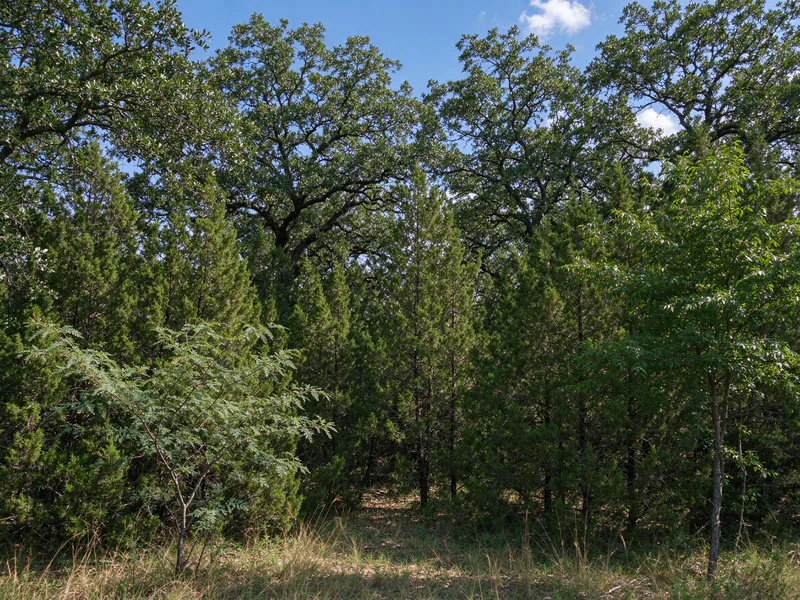
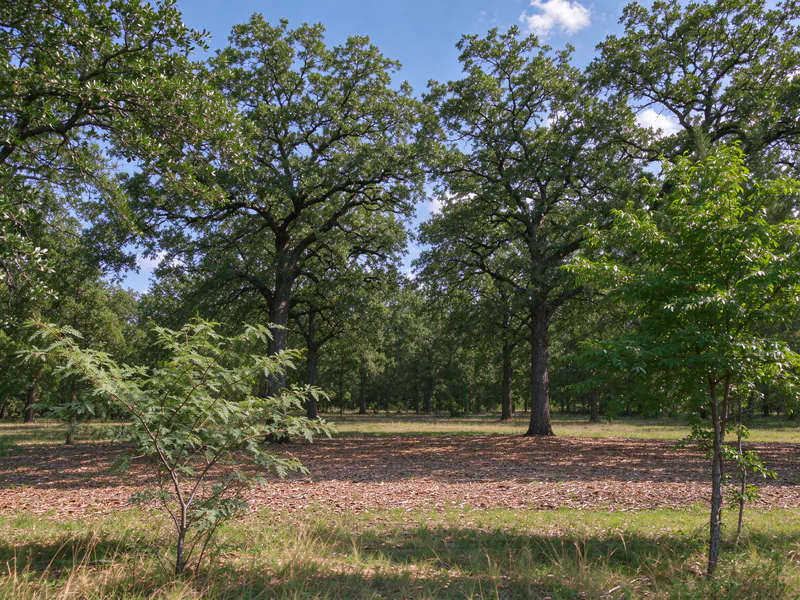
Arcady Temple Land Clearing arranges selective clearing across Temple and Bell County, with the work done by independent, insured clearing contractors. Most Bell County owners do not want every tree gone. They want the cedar, brush and vines out from under the live oaks, post oaks and pecans, so the good trees have light and the land is usable again. Selective clearing is the work of doing that without killing the trees you meant to keep.
What happens on the first visit
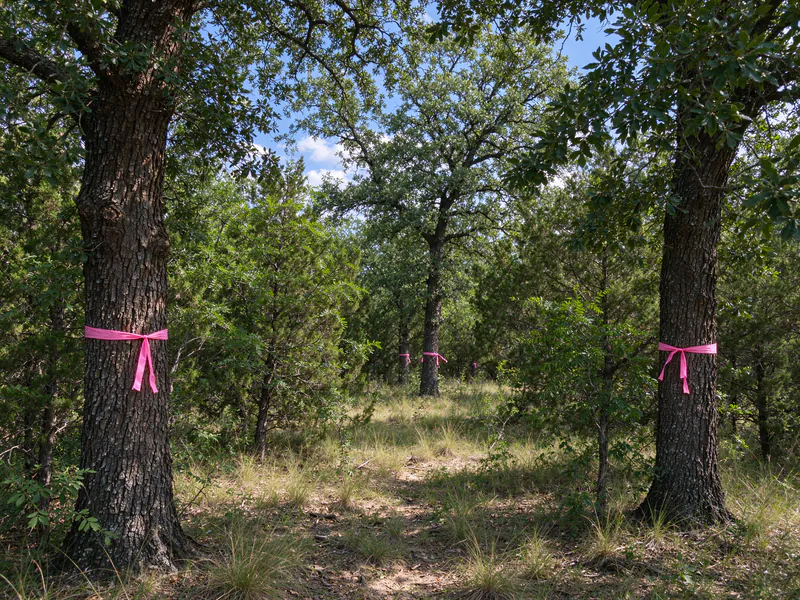
Every keeper is flagged before any machine arrives. Then each one gets a working line marked outside its drip line, the edge of its canopy, because most of a tree’s feeding roots sit in the top foot or so of soil within and beyond that line. The walk also plans machine routes, so the mulcher reaches the cedar without driving across root zones.
The visit is also the time to talk honestly about which trees are worth keeping. A healthy oak with room to grow is worth the extra care. A tree already crowded out, leaning badly or sitting where a house pad will go is often better removed now than lost slowly later.
How kept trees get hurt, and how that is avoided
Trees in a clearing job are rarely killed by the cutting itself. They are hurt by what happens around them.
- Root compaction. Tracked machines crossing a root zone on wet clay crush the soil and the fine roots in it. Machines stay outside the marked line.
- Bark wounds. A cutting head or a falling cedar can strip bark from a keeper’s trunk. Near trunks, cutting is done by hand.
- Grade changes. Soil piled over roots, or scraped away from them, starves a tree for years. Clearing leaves grade alone around keepers.
Oak wilt timing
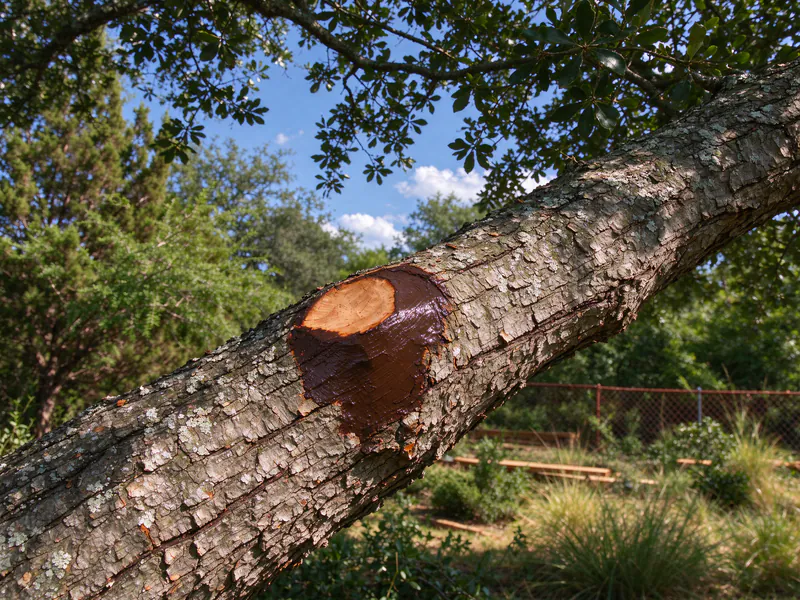
Oak wilt is documented in 76 Texas counties, mostly west of I-35 from Dallas to San Antonio, and clearing near oaks in Central Texas is planned around it. Texas A&M Forest Service advises avoiding wounds on oaks from February through June, when the sap beetles that carry the fungus are most active, and painting any fresh oak wound at any time of year. It lists land and cedar clearing among the activities that wound trees.
In practice, selective clearing around oaks is either scheduled outside that window or done with extra care inside it, and any accidental wound is painted right away. Red oaks and live oaks are handled with particular care, because red oaks produce the spore mats and live oaks share root systems that spread the disease underground. The oak wilt and land clearing guide explains the disease and the precautions.
Planning work around oaks?
Tell us roughly how many trees you want kept and when you hoped to start.
Cedar under oaks
The most common selective job in Bell County is cedar under oaks. Ashe juniper grows up under the canopy, crowds the oaks and shades out grass. It can be cut by hand near trunks and mulched where a machine can reach, and because Ashe juniper does not resprout from a low cut, it stays gone. See cedar clearing for cedar on open ground.
On steep, shaded slopes and draws, mature cedar mixed with oaks and elms can be golden-cheeked warbler habitat. That question is settled before work starts, as the golden-cheeked warbler guide explains.
Selective clearing on homesites
On a homesite, selective clearing often sits beside lot clearing: the pad and driveway are cleared and grubbed, and the rest of the lot is cleared selectively to keep shade and character. The two have to be planned together, because a tree kept too close to the pad usually dies from construction a few years later.
After the work
Kept trees often respond to the extra light and water within a season or two. Expect sprouts from cut hardwoods and seedlings in the newly sunny ground; a mowing or spot-treatment pass in the first year keeps the understory from coming back, as the guide on whether brush grows back explains.
Thinning, understory and canopy
Selective clearing comes in degrees.
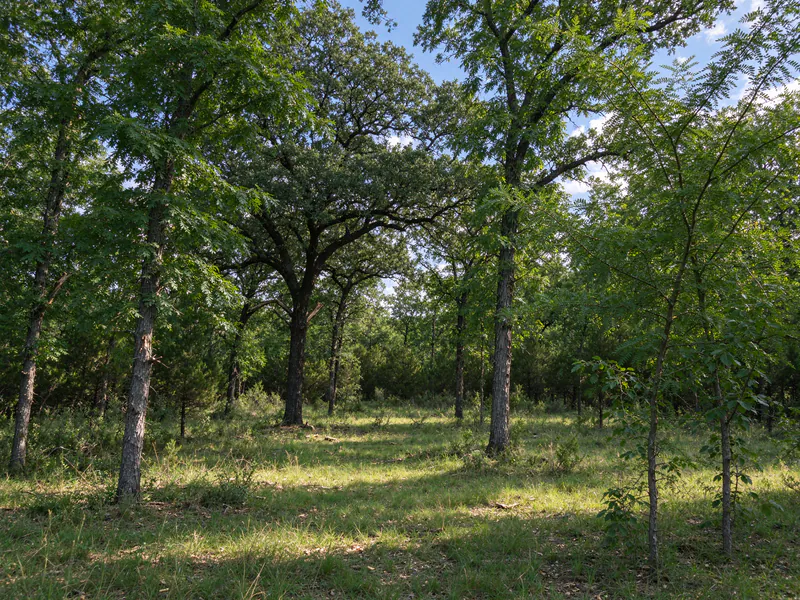
- Understory only. Cedar, brush and vines under the canopy are removed; every tree over a set size stays. This opens views and grass under existing shade.
- Thinning. Crowded trees are removed so the strongest have room. Useful in dense stands of young oaks or elms.
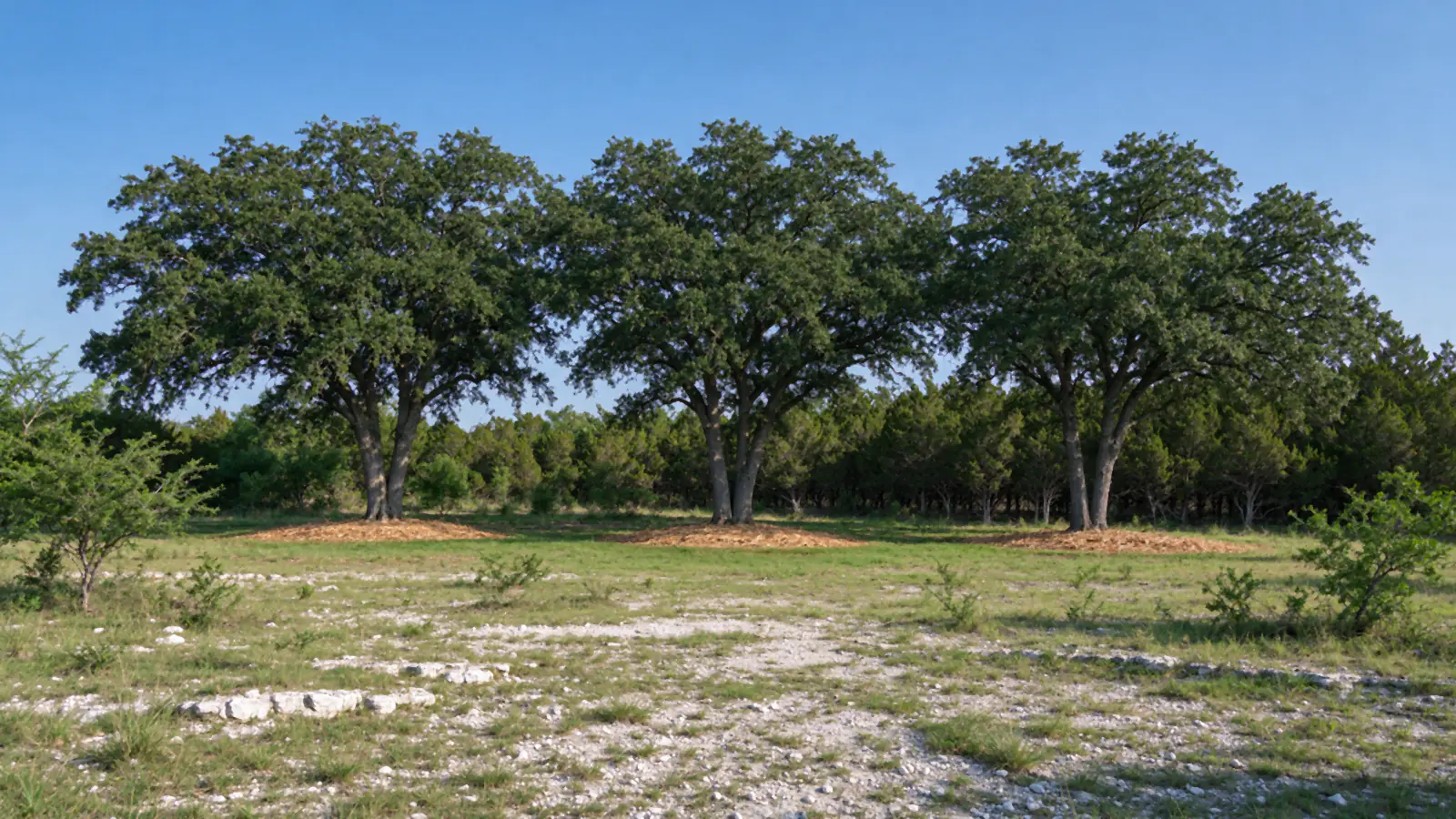
- Keepers only. Everything except flagged trees is cleared. Common on homesites and pasture where a few shade trees are wanted.
Each degree changes how long the work takes and how the tract looks afterward, so the walk-through settles which one you want, area by area.
Shade, grass and wildlife
Opening up a stand lets light reach the ground, and grass usually follows within a season or two on Bell County soils. Leaving some brush along fence lines and creeks keeps cover for wildlife, and many owners ask for that on purpose.
Selective clearing over time
Some owners clear selectively in stages: the area around the house first, the pasture edges next, the back woods last. That spreads the cost and lets you see how the kept trees respond before deciding how open you want the rest. Each stage is walked again, because a tract changes quickly once light reaches the ground and seedlings appear where the cedar was. The kept trees also get a second look at each stage.
What selective clearing costs
Selective clearing costs more per acre than clearing everything, because machines work around trees and more is done by hand. The number and spacing of keepers sets how much more. Typical Central Texas budgeting ranges for mulching run about $1,600 to $4,000 an acre for mixed cedar and small trees and $2,700 to $5,200 or more for dense cedar; selective work sits toward the higher end. The cost guide explains the drivers, and the estimate checklist shows how a quote should name the trees kept.
To walk a tract and flag the keepers, call (254) 269-4999 or send photos through the form below.