Last Updated:
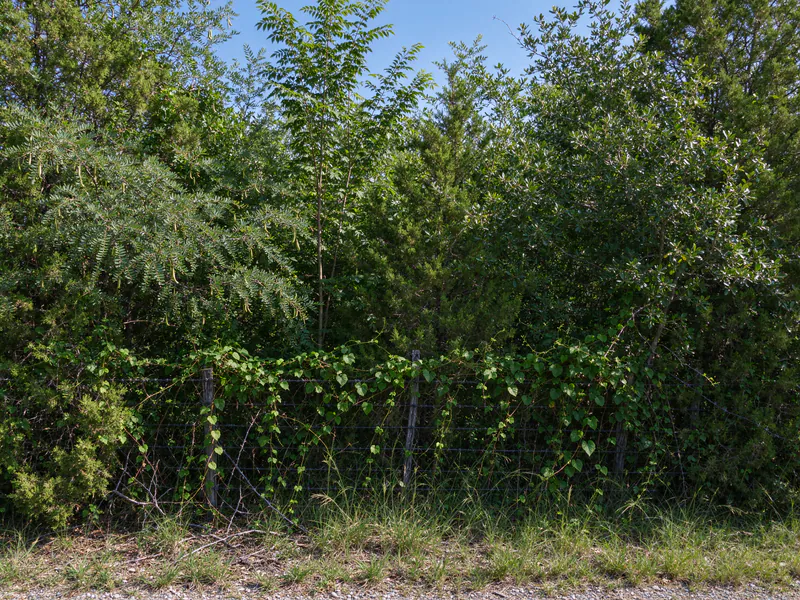
Arcady Temple Land Clearing arranges brush clearing across Temple and Bell County, with the work done by independent, insured clearing contractors. Overgrown lots, thick underbrush, vines and saplings are the most common reason people call. The question is rarely whether the brush can be cleared. It is how far down you want it cleared, and what happens to the debris afterward.
What happens on the first visit
The walk-through settles three things.
- The finish you want. Mowable lawn, open pasture, a fire break along a fence, or ground ready for something to be built later. Each points to a different method.
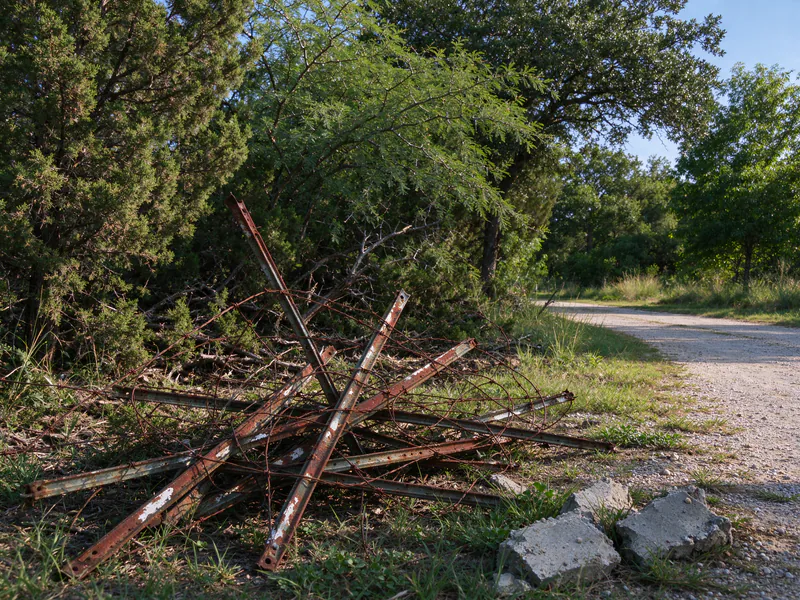
- What is hiding in the brush. Dumped trash, old fence wire, T-posts and concrete are common on vacant lots and old fields. They are flagged or pulled first, because they ruin cutting teeth and hide trip hazards.
- What stays. Trees worth keeping get flagged, and the cutting near them is done by hand.
Three finish levels
| Finish | What it involves |
|---|---|
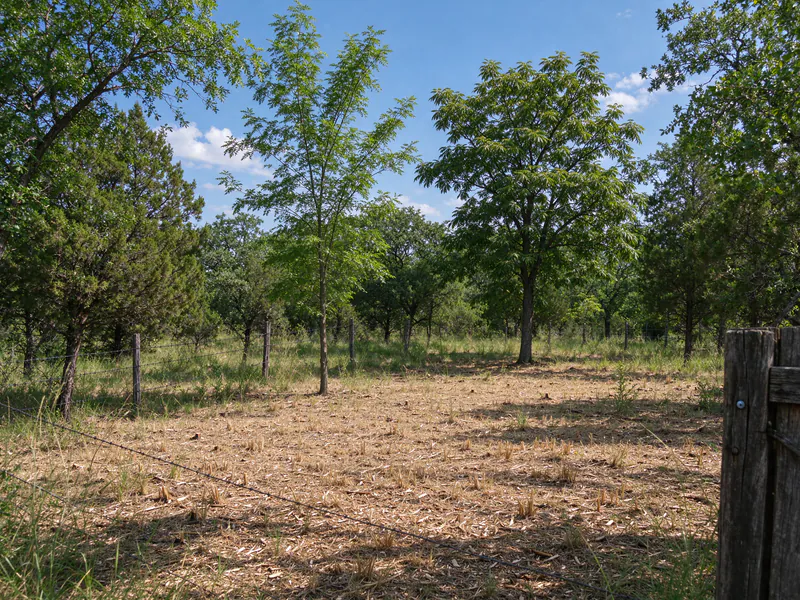
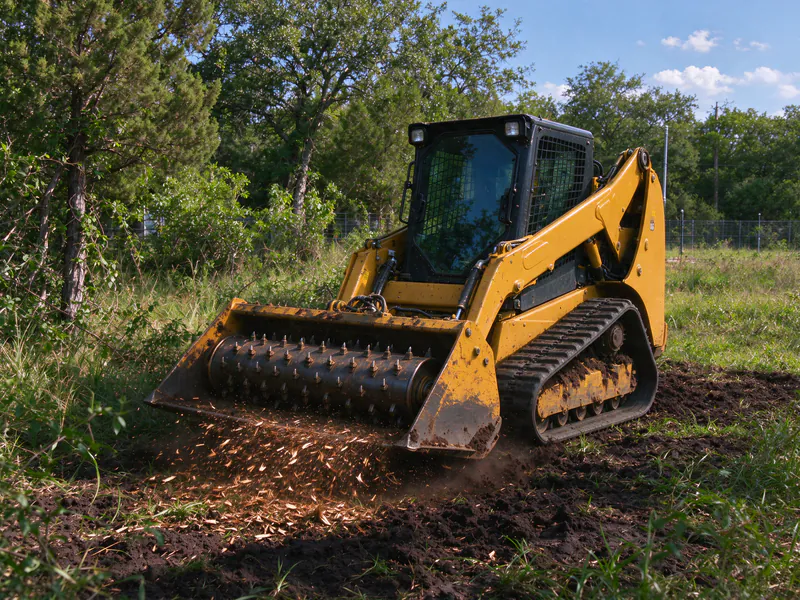
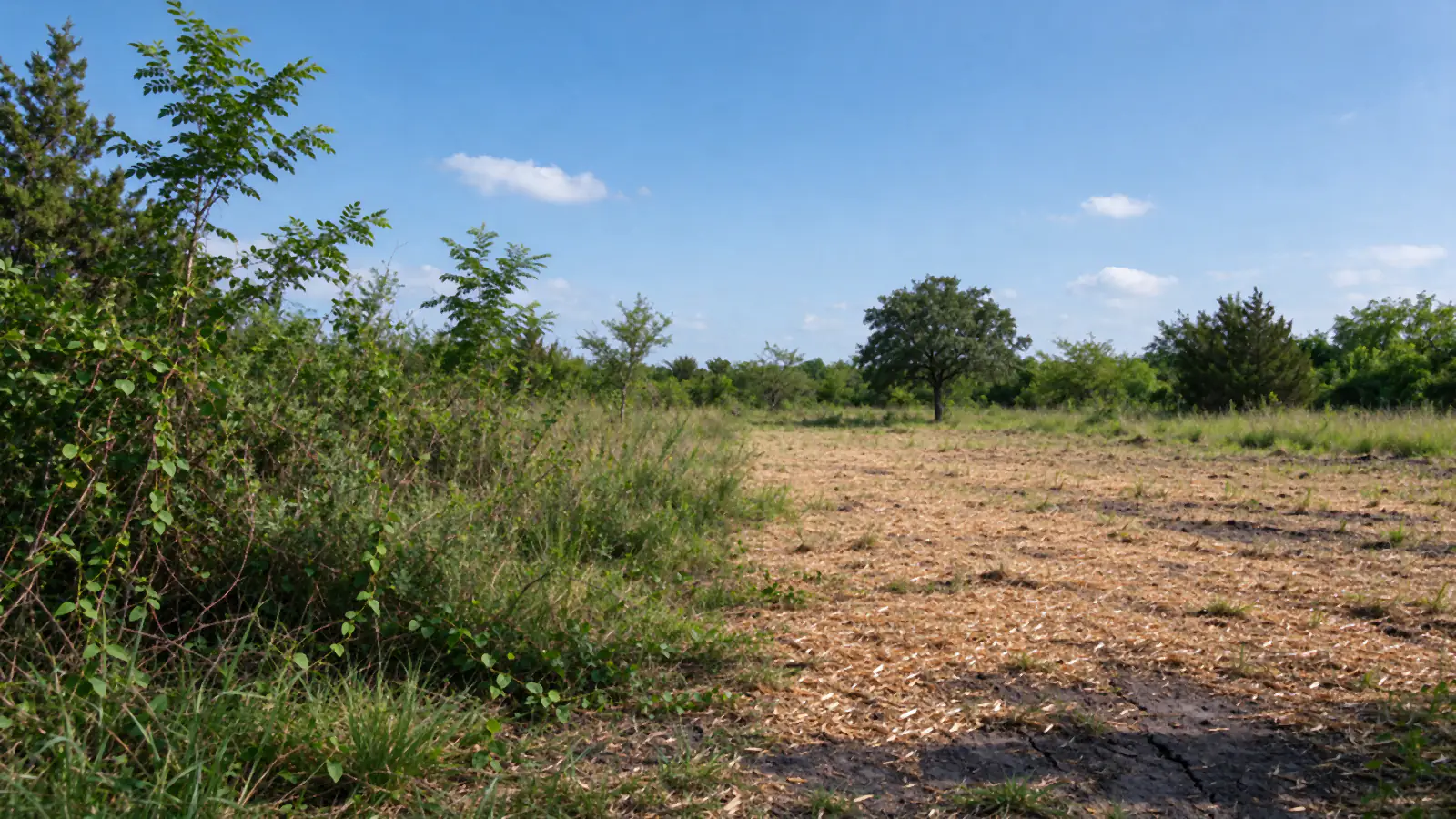
| Cut and mulched at grade | A mulcher or brush cutter takes everything to ground level and leaves the chips. Fastest and cheapest. |
| Cut with stumps ground | Same, with stumps ground a few inches below grade so a mower can cross. |
| Grubbed | Roots and stumps come out with an excavator or dozer. Soil is disturbed and may need seed and erosion control. |
Most residential brush jobs land on the first or second finish. Grubbing is for the areas where something will be built or planted, which lot clearing and stump removal cover in more detail.
Overgrown lots and code notices
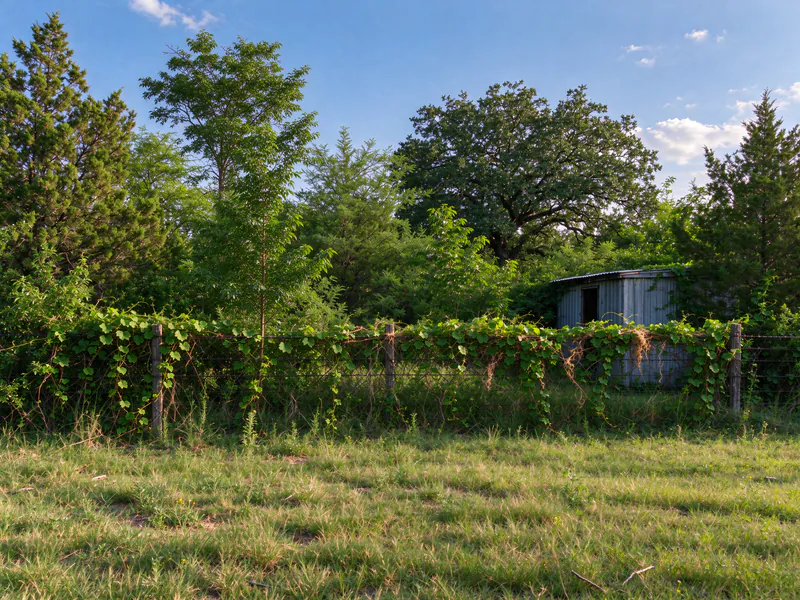
Many calls start with a city notice about high weeds and brush on a vacant lot, or a neighbor worried about fire against a fence. A first clearing pass gets the lot to a state where a mower can keep it, and after that two or three mowings a year usually do. Dense growth on fence lines and under trees gets cut by hand where machines would do harm, and long, narrow strips are covered under fence line clearing.
Where the debris goes
What happens to brush depends on which side of a city line the lot is on.
- Inside Temple, the city code bans outdoor burning of brush and limbs except land-clearing burns the Fire Marshal permits when no practical alternative exists. Contractor-cut debris has to go to the landfill or a designated site, not to the curb for city pickup.
- Inside Belton, any burn needs an open burn permit, $100 for residential, and an inspection.
- Outside city limits, state rules allow land-clearing burns unless the county judge has a burn ban in place. Bans are common in late summer and early fall, as in August and September 2026.
That is why forestry mulching, which leaves the debris as cover, is the usual answer for brush. The guide to burning brush in Bell County compares mulching, hauling and burning in detail. Ash wood stays in the county under the emerald ash borer quarantine, explained in the emerald ash borer post.
Got a city notice or a fire worry?
Send photos and the address. A first pass can usually get a lot back to mowable.
What grows back
Brush that is only cut or mulched will put up sprouts. How much depends on what was growing.
- Ashe juniper (cedar) has no buds on its trunk and does not come back once cut below its lowest green limb.
- Mesquite sprouts from buds at and just below the soil line, so a cut stump often returns with several stems. See mesquite removal.
- Hackberry, elm and many other hardwoods sprout from the stump and roots.
- Seedlings come in from the seed bank once sunlight reaches the soil.
Grass that comes back quickly is the strongest defense, and a mowing pass in the first year usually keeps a cleared lot from closing in again. The guide on whether brush grows back after clearing goes species by species.
Fire risk and defensible space
Dry brush against fences, sheds and houses is a fire load in a Central Texas summer. Clearing a strip around structures, mowing it, and keeping debris piles away from buildings reduces that risk. The county issues burn bans in dry spells for the same reason, which is another argument for mulching over piling.
Vines, saplings and the seed bank
Brush on a neglected lot is usually three layers. Vines climb fences and trees and hold everything together. Saplings of hackberry, cedar, mesquite and elm make up the thicket. Underneath, the soil holds years of seed waiting for sunlight. Clearing deals with the first two layers; the third shows up a few weeks after the first good rain.
Vines are cut at the base and pulled off fences and kept trees by hand, because a machine pulling them drags the fence or strips bark. Saplings are mulched or cut. The seed bank is handled by getting grass established quickly and mowing in the first season, before the new seedlings get woody.
Clearing around buildings and fences
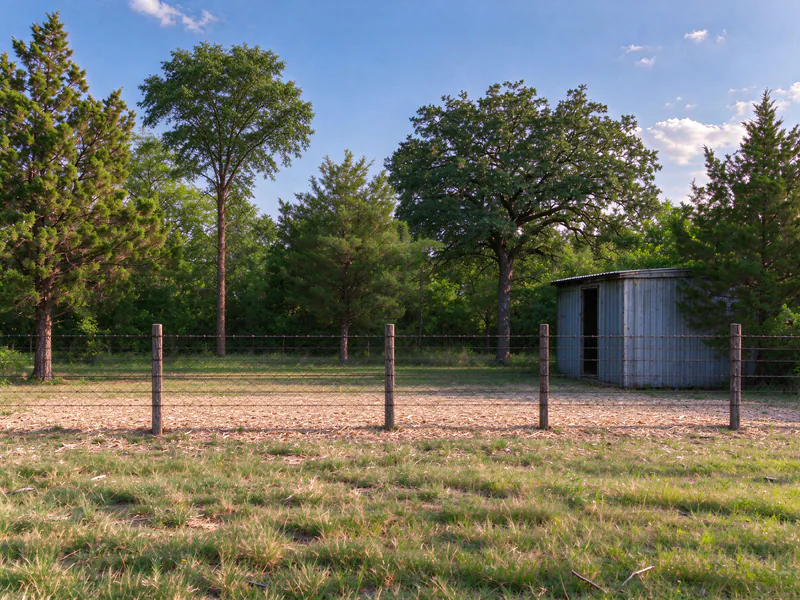
Around houses, sheds, barns and fences, the work slows down on purpose. Machines stay back, and the last few feet are cut by hand so siding, wire and posts are not hit. Debris is moved away from structures rather than piled against them, which also matters for fire risk in a dry summer. Where a fence needs a clean strip on both sides, the job overlaps with fence line clearing and is planned as one, so the machine only comes out once.
What brush clearing costs
Typical Central Texas budgeting ranges for mulching run about $1,300 to $2,500 an acre for light brush and understory and $1,600 to $4,000 an acre for mixed brush, cedar and small trees. Small lots are priced around a machine day. Hauling instead of mulching adds trucking and landfill fees. The land clearing cost guide shows how those parts add up, and how long it takes to clear an acre explains the schedule.
To get an overgrown lot looked at, call (254) 269-4999 or send photos through the form below.