
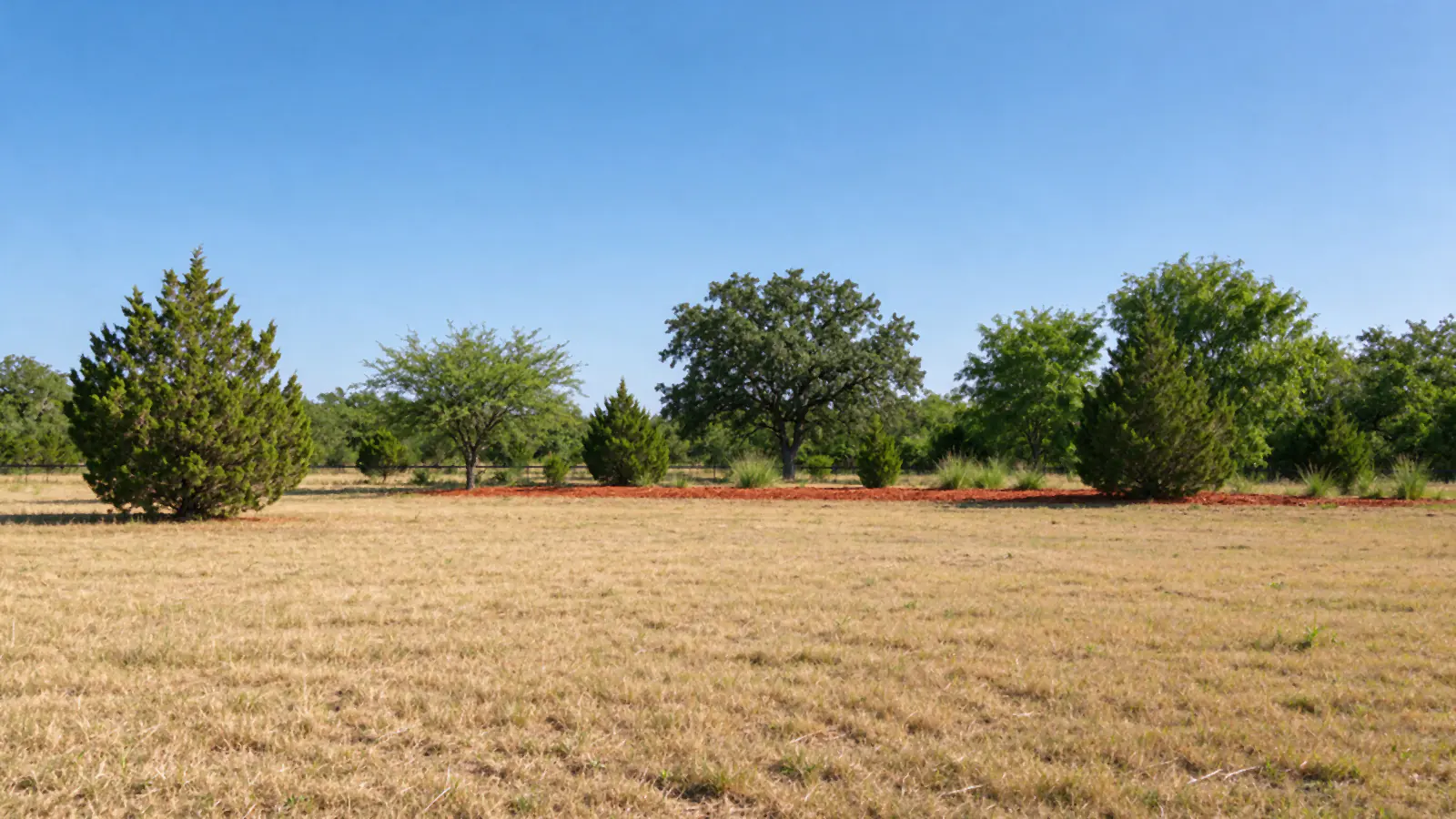
Short answer: a burn ban stops the match, not the machine. Clearing can go on through a ban as long as the plan for the debris does not depend on burning: mulch it where it falls, haul it, or stack it well away from anything that can catch and wait for the ban to lift.
Arcady Temple Land Clearing plans late-summer jobs in Bell County around this, because a pile that cannot be burned is the most common reason a clearing job stalls.
Why the bans come when they do
Central Texas summers dry out grass and brush week by week. By August, pastures that were green in May are cured and brittle, and a spark from a pile can run across a field faster than anyone can reach it. That is when the Bell County judge is most likely to order a ban on outdoor burning in the unincorporated county, and when the commissioners court may extend it.
The pattern held this year. A ban took effect in August, another followed in September, and the September order was lifted on October 1 after rain. Nobody can promise the same calendar next year, but anyone planning to burn cleared brush between midsummer and the first good fall rain should assume a ban is possible.
What a ban does and does not stop
A county ban applies outside city limits. It stops open burning of brush piles and similar fires. It does not stop:
- cutting, mulching or shredding;
- grubbing stumps and roots;
- hauling debris to a landfill or other site.
Inside Temple, Belton and Salado, city rules on burning apply all year, with or without a county ban, and Belton’s fire department points out that the county’s order covers land outside the city. The guide to burning brush in Bell County explains each set of rules.
Three ways to keep the job moving
Mulch in place. Forestry mulching grinds standing brush and cedar into a chip layer and leaves it on the ground. There is nothing left to burn, so a ban does not matter. In late summer the chip layer has a second benefit: it shades the soil and holds moisture until fall rain brings the grass back.
Haul it. Grubbed stumps, root balls and big trunks that a mulcher should not chew can be loaded and trucked out. The Temple Landfill takes tarped loads for a per-load minimum for non-residents, plus a state fee. Hauling costs more than mulching, but the land is finished the day the trucks leave. The cost guide shows how hauling adds to a price.
Stack and wait. Where burning is the plan, debris can be piled during the ban and burned once it lifts. Piles should go on bare ground, away from fences, barns and tree lines, with the grass around them kept short. A pile of dry cedar in August is a fire waiting for a cigarette or a lightning strike.
Brush piling up during a ban?
Send photos and the acreage. Mulching and hauling both work while burning is off the table.
Ash and hardwood are a separate question
Whatever happens to the rest of the brush, ash wood and hardwood firewood stay in Bell County because of the emerald ash borer quarantine. The emerald ash borer post explains what that covers.
Ground conditions in late summer
The same weather that brings bans makes the ground easy to work. Dry clay east of I-35 carries machines without rutting, which is not true in May or after a wet October. The flip side is cracked, rock-hard clay that is tough on grubbing. The guide on clearing after rain on black clay covers how the ground changes through the year, and the mulching versus grubbing guide explains which method suits which finish.
Planning for next summer
If the land is going to be cleared anyway, choosing a method that never needs a burn day removes the ban from the schedule entirely. If burning is part of the plan, put the burning in the cooler, wetter months and the cutting whenever it suits.
For a clearing plan that does not depend on the weather service, call (254) 269-4999 or send the details below.